By: Dr. Bruce Mark, DC | Hollywood Laser Pain Center | Hollywood, Florida
Knee pain is among the most common causes of chronic pain in the United States, second only to back pain, and it affects patients across every age group and activity level. For residents of Hollywood, Hallandale Beach, Pembroke Pines, Miramar, and Fort Lauderdale, knee pain can limit everything from morning walks on Hollywood Beach to climbing stairs at home. The default care pathway, including anti-inflammatory medications, cortisone injections, and eventual knee replacement, is one of several approaches that patients discuss with their healthcare teams. Hollywood Laser Pain Center offers the Regenerative Medical Laser™ protocol as part of a non-surgical care approach for patients with knee pain related to osteoarthritis and soft tissue conditions.
Published research has examined the effects of repeated cortisone injections on joint structure in knee osteoarthritis, with findings that have shaped clinical conversations about long-term injection cycles. Discussing the full range of conservative and clinical options with a qualified clinician is part of standard treatment planning for chronic knee pain.
At Hollywood Laser Pain Center, I have treated knee pain patients from across Broward County for more than 27 years, from active adults whose running goals are at risk to retirees whose mobility and independence depend on knee function.
What Is Actually Happening in an Arthritic Knee?
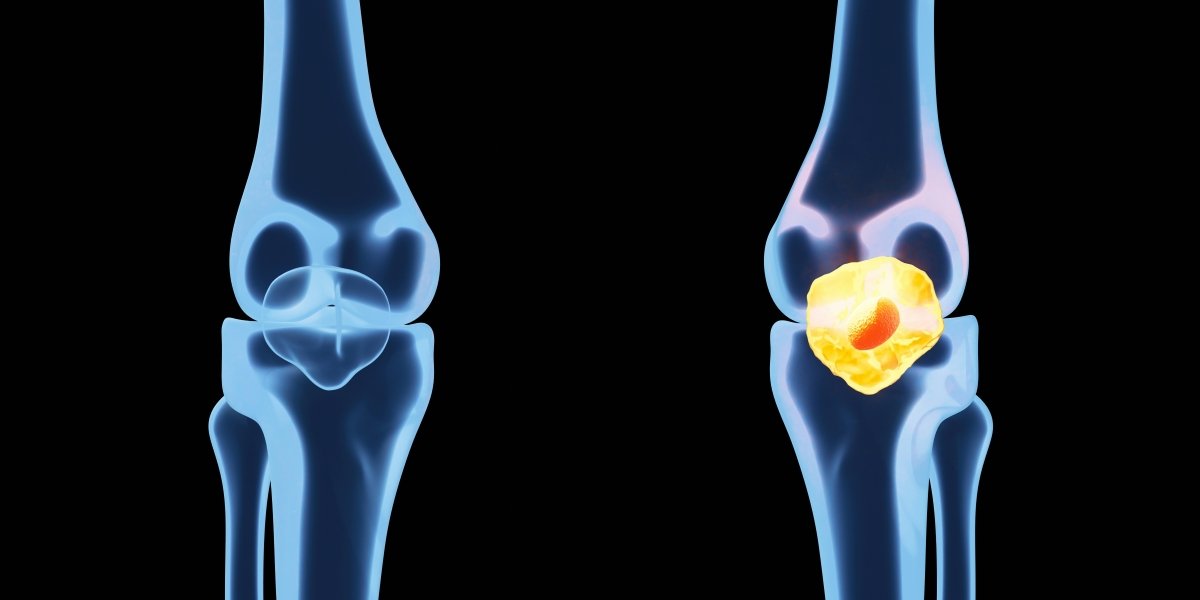
Osteoarthritis of the knee involves the progressive breakdown of articular cartilage. The smooth articular surface degrades under mechanical load, subchondral bone becomes exposed, bone spurs can form, and the synovial membrane responds with chronic inflammation. These tissue changes are associated with the swelling, warmth, and pain patients describe with knee arthritis.
The CDC reports that knee osteoarthritis affects more than 32.5 million U.S. adults. A 2017 study published in JAMA examined the effect of triamcinolone injections in patients with knee osteoarthritis. Researchers compared patients who received triamcinolone every 12 weeks over two years with patients who received saline injections. The triamcinolone group experienced significantly greater cartilage volume loss, with no significant difference in knee pain between groups. These findings have contributed to ongoing clinical discussions about the role of repeated cortisone injections in long-term joint care planning.
Published research, including a New England Journal of Medicine study on arthroscopic partial meniscectomy for degenerative meniscal tears (Sihvonen et al., 2013), has reported that the procedure was not more effective than sham surgery for pain relief in this patient population. The broader clinical literature has generally supported structured conservative care as a first-line approach for early-to-moderate knee osteoarthritis, with surgical interventions considered more carefully when conservative care has not produced adequate response.
How Is the Regenerative Medical Laser™ Protocol Used for Knee Pain at Hollywood Laser Pain Center?
At Hollywood Laser Pain Center, the Regenerative Medical Laser™ protocol uses Class IV near-infrared laser energy directed at the knee joint and surrounding tissue as part of a non-surgical care plan. Photobiomodulation has been studied for its cellular-level effects across multiple joint tissues, with published research examining its relationship to pro-inflammatory cytokines in the synovial membrane, chondrocyte metabolic activity and matrix metalloproteinase activity in articular cartilage, and remodeling processes in subchondral bone.
Research published in Lasers in Medical Science has examined photobiomodulation in patients with knee osteoarthritis, with multiple studies reporting reductions in pain and improvements in function. Additional research in Photomedicine and Laser Surgery has examined photobiomodulation in joint pain populations, reporting outcomes including pain and range-of-motion measures. Each treatment plan is developed on an individual basis following clinical evaluation.
What Does Graston Technique Add for Knee Patients?
The iliotibial band, quadriceps and patellar tendons, and infrapatellar fat pad are common areas where accumulated soft tissue restriction can contribute to patellar tracking problems and pericapsular knee pain. Graston Technique is an instrument-assisted soft tissue mobilization method designed to address fascial restrictions in these structures and support more balanced soft tissue mechanics. For active adults whose knee pain has a meaningful soft tissue component alongside articular pathology, this mechanical dimension is often integrated into a comprehensive treatment plan.
What Is the Biomechanical Dimension of Knee Pain?
The knee is sometimes described as a transmission joint. It receives forces from the foot and ankle below and the hip and pelvis above. Overpronation of the foot, hip abductor weakness, and gait asymmetries from compensating for other painful areas can create abnormal loading patterns that contribute to ongoing articular stress even when the joint itself is being treated. My clinical evaluation of knee patients includes lower extremity kinetic chain assessment, including foot mechanics, hip strength, and pelvic alignment alongside the knee itself.
Visit reliefnowlaser.com/providers/hollywood/ to learn more. Patient education content is available at youtube.com/@ReliefNowNation. Contact Hollywood Laser Pain Center at 2607 Polk Street, Hollywood FL 33020 | 954-925-7333.
About the Author
Dr. Bruce Mark, DC | Hollywood Laser Pain Center | 2607 Polk Street, Hollywood FL 33020 | 954-925-7333 | reliefnowlaser.com/providers/hollywood/
Dr. Mark earned his Doctor of Chiropractic from Logan College of Chiropractic with honors and has practiced for more than 27 years in Hollywood, Florida. He holds certifications in Graston Technique and acupuncture, is a former collegiate football player at Wake Forest University, and practices at Broward Medical and Rehab. He is a provider in the national ReliefNow® network.
Disclaimer: The information provided in this article is for general informational purposes only and should not be construed as medical advice. Effectiveness of treatments may vary depending on individual circumstances. Consult a qualified healthcare professional to discuss your specific medical needs and treatment options.