By: Graham Hollister
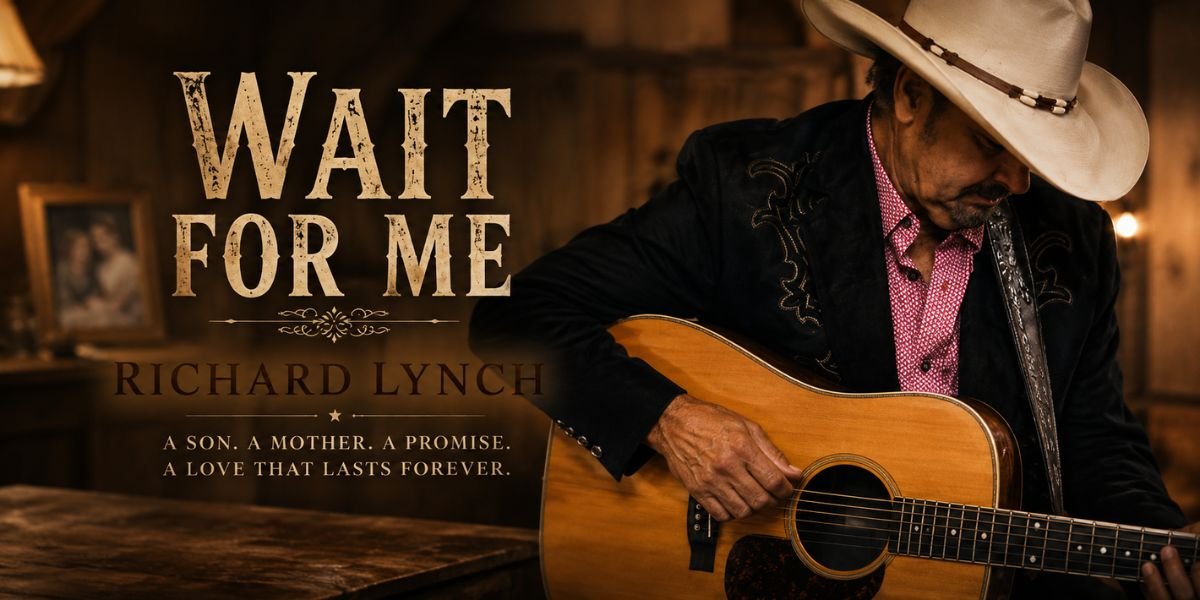
There is a particular sort of country song that requires no clever production trick, no fashionable collaboration and certainly no attempt to convince the listener of its authenticity. It simply tells a story, tells it well and leaves the emotional consequences to you. Richard Lynch’s “Wait For Me” is precisely that kind of record, and it is difficult to imagine anyone with an appreciation for traditional country music remaining unmoved by it.
Co-written by Lynch and John Lee, “Wait For Me” concerns that most inevitable and yet impossible of experiences: saying goodbye to a parent. Lynch takes us to the bedside of his mother, whom he previously visited while she slept. Holding her hands prompts memories not merely of childhood, but of everything those hands represented throughout his life.
It is an exceptionally effective piece of songwriting because it deals in specifics.
Lynch remembers the tears those hands wiped away, the pain they soothed, the clothes they stitched and the seemingly impossible burdens they carried. “The mountains they have moved” is perhaps the grandest phrase in the lyric, but by the time it arrives, Lynch has earned it. We understand exactly what he means.
This is motherhood depicted not through greeting-card declarations but through work.
That distinction is important.
Country music has historically been very good at recognizing the dignity of people whose lives might otherwise pass undocumented. Mothers and fathers, farmers and factory workers, soldiers and homemakers have populated some of the genre’s finest songs because country writers once understood that an ordinary life could contain extraordinary stories. “Wait For Me” belongs proudly to that tradition.
The chorus is devastatingly direct. Lynch has received word that his mother is “ready to leave with God.” She has made peace and has always believed. His response is not some elaborate philosophical consideration of mortality. It is the instinctive cry of a son: Momma, I’m on my way.
And then comes the title.
Hold on, wait for me.
Those five words contain practically everything the song needs to say.
Lynch is particularly well suited to material such as this. His voice has never depended upon technical fireworks. It is a mature country voice, sturdy and weathered, carrying the unmistakable impression that the fellow singing has actually lived long enough to understand his lyric. There is no unnecessary vocal gymnastics here. Lynch allows the words to dictate the performance.
That restraint is crucial because “Wait For Me” could easily have become mawkish in less capable hands. Songs about dying parents practically arrive with sentimentality built into them. Pile on strings, enormous drums and an overwrought vocal and the result can begin instructing listeners how they are supposed to feel.
Lynch does something considerably wiser. He trusts them.
The traditional country arrangement supports rather than overwhelms him, maintaining the intimacy of someone sitting beside a bed and remembering. The recording leaves room for the listener’s own experiences to enter, and inevitably they will.
Perhaps the finest verse arrives toward the end, when Lynch considers whether his mother’s hands are tired and aching because of everything they have done “for someone else’s sake.” He then wonders whether, during their final time together, he might have managed to return just a little of the comfort she had given him throughout his life.
That is where “Wait For Me” moves beyond bereavement and becomes a song about gratitude.
Its Christian faith is equally straightforward. Lynch does not use heaven as a convenient dramatic device. The mother has believed throughout her life, and consequently the references to God feel like part of her character rather than something added to broaden the record’s appeal. When Lynch eventually sings, “Your pain is gone / Now you can rest,” there is sorrow, certainly, but also acceptance.
Most importantly, she waited.
That final revelation changes the emotional complexion of everything preceding it. The desperate plea of the chorus has been answered. He arrived. She saw how much he loved her. Whatever words needed saying were said.
In contemporary country music, where records are frequently constructed around instant hooks and playlist-friendly production, “Wait For Me” can sound almost defiantly unfashionable. Good.
Richard Lynch has spent his career championing the country traditions that existed long before anybody worried about algorithms, and this recording demonstrates that those traditions remain valuable precisely because the human experiences behind them haven’t changed.
Parents grow old. Children suddenly realize they are no longer children. Hands that once seemed impossibly strong become fragile. And eventually there comes a moment when all the years collapse into one final opportunity to say what should have been said a thousand times before.
“Wait For Me” captures that moment beautifully.
This isn’t revolutionary country music. It doesn’t need to be. It is something increasingly precious: a believable singer, a meaningful lyric and a story worth hearing.
Keep the tissues nearby.