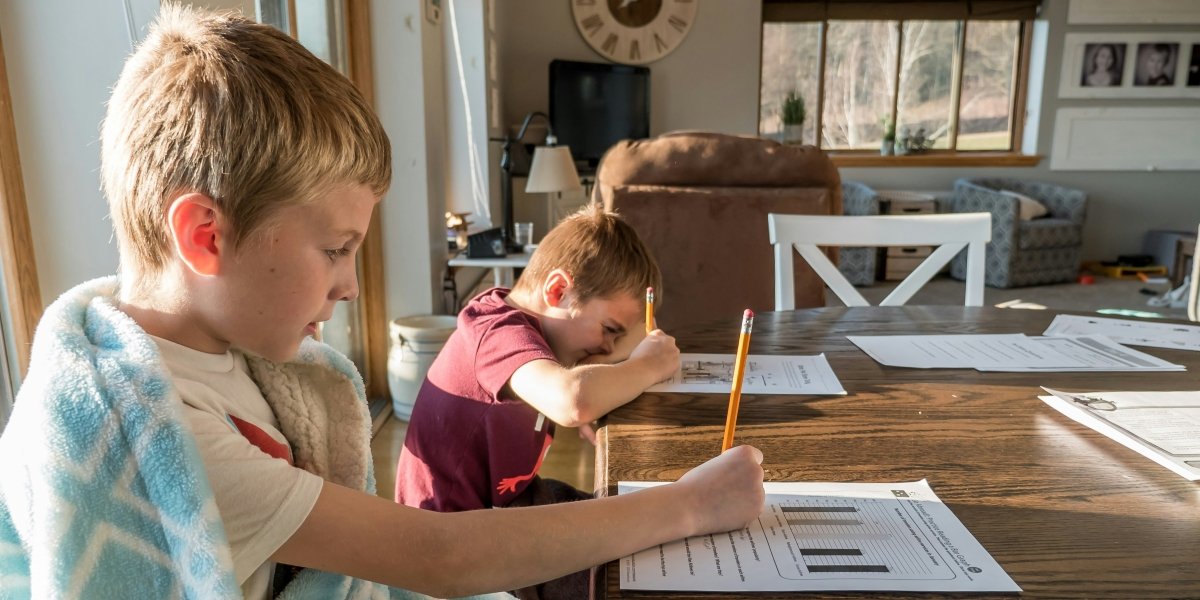
When a child struggles in school, the whole family can feel the weight of it. Homework takes over evenings, tutoring fills afternoons. The child experiences frustration. Siblings can feel overlooked. Parents look everywhere to find answers, yet still wonder whether they’re doing enough. They lie awake worrying about their child’s future.
For families supporting children with learning difficulties, neuroscience offers a different way of thinking about why learning is hard and what can change.
Charlie’s Story: From Struggling to Thriving
From his first days in the classroom, learning was a mountain to climb for Charlie. He was lost, struggling to follow directions, read or write, coordinate basic movements. The school told his family they were already giving him all the support they could.
Like many parents in this situation, Charlie’s mother searched tirelessly for answers, changing schools several times. But learning remained difficult, and the strain touched every member of the family.
Everything shifted when his family learned about a neuroplastic approach, brain exercises designed to strengthen the underlying brain pathways used in learning. Charlie went on to take part in a personalized cognitive program.
His family describes the two years that followed as a turning point. By their account, Charlie moved into a demanding academic school and began managing his workload alongside his peers. The child who was once lost became an articulate, humorous and self-directed student.
What Is Neuroplasticity?
For decades, experts believed that a child’s brain capacity was largely fixed early in life, meaning students with learning difficulties simply had to work around their limitations.
Neuroscience now tells a different story. Neuroplasticity is the brain’s natural ability to grow, adapt, and form new neural connections throughout life, and researchers have studied how that capacity applies to learning.
Just as physical therapy helps build physical strength, targeted cognitive exercises are designed to strengthen core brain functions such as visual memory, auditory processing and critical thinking, which all play a part in how a child learns. A child’s current struggles do not set the limit for their future potential.
Accommodations vs. Capacity Building
Most traditional school supports, like extra time on tests, shortened assignments, or specialized software, help students cope with the day’s assignments. While these accommodations can help a student in the moment, a cognitive approach pursues a different goal, which is to work on the underlying cognitive functions themselves.
Signs Cognitive Programming Might Help
Challenges show up differently in every child. You might notice your child:
- Takes hours to complete homework that should take 30 minutes.
- Has difficulty organizing thoughts, remembering multi-step instructions, or staying focused.
- Struggles with reading, writing, or math despite continuous practice.
- Earns decent grades, but only through immense, exhausting effort from both child and parents.
Some children in a cognitive program have a formal diagnosis such as ADHD or a learning disability. Others have no diagnosis at all and simply work twice as hard as everyone else just to keep up. Programs of this kind are built with both groups in mind.
Hope Grounded in Science
A cognitive program works on the processes underneath academic skills rather than on the assignments themselves. The focus is on how a child takes in information, holds onto it, and reasons through it.
Families often arrive at this kind of program after years of strain at home. What a cognitive approach offers is a different starting question. Instead of asking how to work around a difficulty, it asks whether the capacity underneath it can be strengthened.
For families worried whether they’re doing enough, that question is worth exploring. To learn more about a cognitive approach:
- Learn about Arrowsmith: An evidence-based cognitive program designed to strengthen the brain’s capacity to learn, available online and through participating schools and learning centers.
- Talk to your school: Ask your school district or private school about offering Arrowsmith alongside its academic programs.