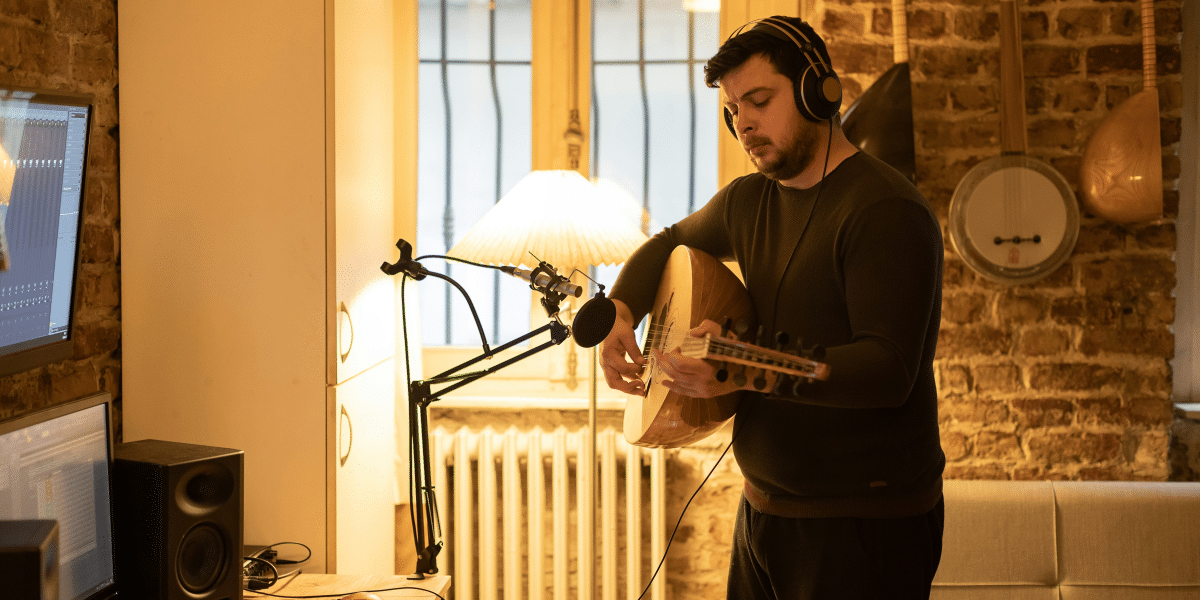
Setting Up Your Recording Space
Recording guitar tracks can be a rewarding experience, whether you’re laying down riffs for a demo or tracking parts for a full-fledged album. In this guide, we’ll explore some essential tips and techniques for capturing great guitar recordings, whether you’re working in a professional studio or setting up a home recording environment.
Acoustic Treatment:
- Choose a room with minimal sound reflections and consider investing in acoustic treatment to minimize unwanted reverberations.
- Place acoustic panels strategically around the room to absorb sound reflections and improve the clarity of your recordings.
Isolation:
- If recording in a home studio, isolate the guitar amplifier to prevent bleed from other instruments or ambient noise.
- Use isolation shields or microphone baffles to minimize unwanted sound interference.
Selecting the Right Equipment
Microphones:
- Experiment with different microphone types and placements to find the best sound for your guitar amp.
- Dynamic microphones like the Shure SM57 are popular choices for recording electric guitar, while condenser microphones offer a more detailed sound for acoustic guitar.
Audio Interface:
- Invest in a quality audio interface with multiple inputs and low-latency monitoring capabilities.
- Ensure compatibility with your recording software and consider features like phantom power for condenser microphones.
Dialing in Your Guitar Tone
Amplifier Settings:
- Spend time dialing in your amplifier settings to achieve the desired tone for your recording.
- Experiment with different EQ settings, gain levels, and effects pedals to find the perfect sound for your track.
Guitar Setup:
- Ensure your guitar is properly intonated and tuned before recording to minimize tuning issues during tracking.
- Experiment with different guitar pickups and pickup combinations to explore a variety of tonal options.
Recording Techniques
Close Miking:
- Position the microphone close to the guitar amplifier speaker cone for a focused, direct sound.
- Experiment with microphone placement, angling the mic slightly off-axis to capture different tonal characteristics.
Room Miking:
- For a more ambient sound, place a microphone further back in the room to capture the natural acoustics.
- Adjust the microphone placement and room position to achieve the desired balance between direct and ambient sound.
Post-Recording Processing
Editing:
- Use editing software to fine-tune your guitar recordings, correcting timing issues or eliminating unwanted noise.
- Experiment with audio effects like reverb, delay, and compression to enhance the overall sound of your tracks.
Mixing:
- Balance the levels of multiple guitar tracks within the mix, ensuring each part sits well in the overall arrangement.
- Use EQ to carve out space for the guitar in the mix, removing frequencies that clash with other instruments or vocals.
Recording guitar tracks is a blend of art and science, requiring careful attention to detail and experimentation with different techniques. By setting up your recording space effectively, selecting the right equipment, and honing your recording and mixing skills, you can capture professional-quality guitar recordings that enhance your music productions. Whether you’re a seasoned pro or a budding home recording enthusiast, these tips and techniques will help you achieve the perfect guitar sound for your projects.