It’s not every day that a small desert town in Texas becomes a focal point for the art world. But Marfa is not just any town, and what unfolded there recently was far from your average art show.
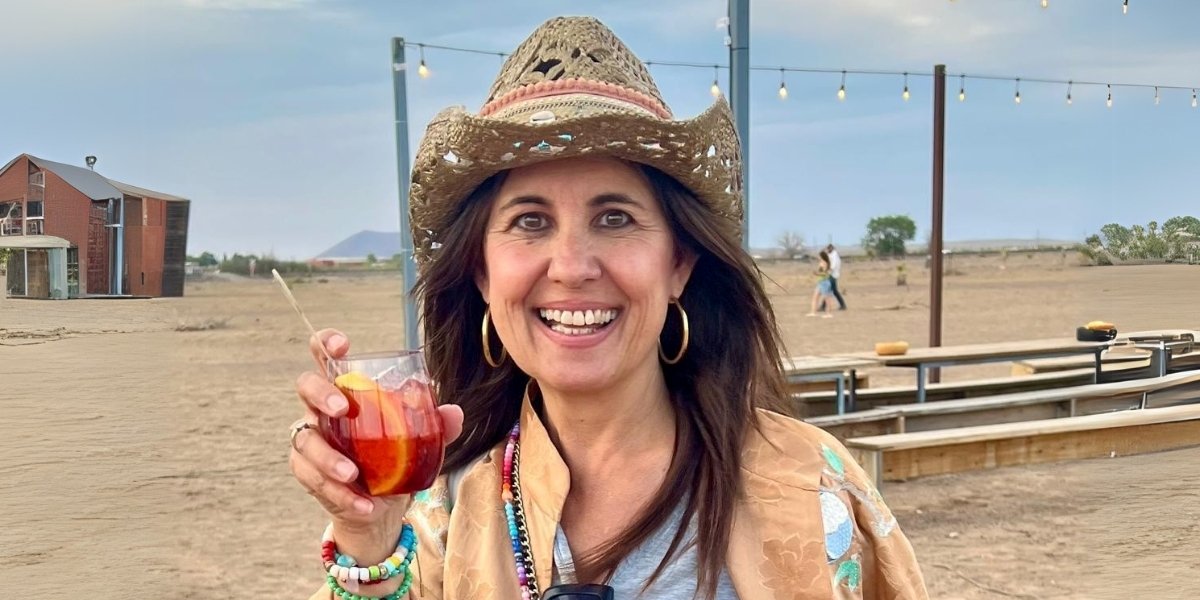
At the heart of this moment was Sonia Borrell, a curator, advisor, and author who has spent years helping artists find their voice while staying true to their vision. She is also the author of Art in Real-Time: A Heartfelt Guide to Navigating the Art World, a thoughtfully candid guide that offers practical insights rather than glossy platitudes, speaking directly to artists and collectors with grounded advice.
In Marfa, she helped shape something that felt more like a gathering of kindred spirits than a traditional exhibition.
Marfa: A Landscape That Inspires More Than Art
Since Donald Judd settled there in the 1970s, Marfa has attracted creatives from around the globe. Its minimalist desert setting, both stark and soothing, has made it a place where art often transcends the gallery walls. But this time, something unexpected unfolded. Hosted at the historic Saint George Hall, the Marfa Invitational Open brought together more than 150 artists in a salon-style exhibition, an event of remarkable scale for Texas.
What made it stand out was its purpose. This was not just an art show; it was an invitation. It celebrated inclusivity, community, and the idea that great art can thrive outside major cities or blue-chip collections. The curatorial committee led an open-call process that welcomed emerging and established artists alike. The result? A collective portrait of Texas creativity that was expansive, untamed, and refreshingly authentic.
Sonia’s Role: Curating with Heart and Vision
Sonia Borrell didn’t enter the Marfa Invitational Open looking to make a statement. She came to listen. Her curatorial style is shaped by years of collecting, advising, and championing artists from diverse backgrounds. But more than credentials, she brings empathy, a curiosity about artists’ lives, not just their work.
With just under 600 submissions to review, she approached the process as a witness rather than a gatekeeper. She understood that this show was about more than selecting pieces for display; it was about creating an environment where people felt valued. Diversity was not a box to tick; it was the foundation of the show.
Inside Saint George Hall, paintings, sculptures, and installations coexisted in an organic, energetic flow. The show felt less like a curated exhibition and more like a conversation. Every piece found its place, and every artist had a role in the room.

A Community Comes Together
What happened next was uncommon. Of the 165 artists selected, nearly all made the trip to Marfa, not driven by visibility or status, but by a desire for connection. People didn’t show up to make a statement. They came to share in the experience.
Moments unfolded that felt spontaneous and genuine. Movement artist Beth Coffey pulled a crowd into the street for an impromptu dance. A soft-lit sculpture by Anese invited visitors into stillness. Ray Smith’s large-scale works commanded attention with quiet confidence. Conversations buzzed between strangers-turned-peers, fueled by curiosity rather than competition.
This is where Sonia’s influence was most evident, not through speeches or the spotlight, but through the environment she helped cultivate. She shaped a space where everyone could participate without pretense, and where the art resonated more deeply than the noise of the art world’s usual hierarchy.
Not Just an Exhibition, But a Meaningful Moment
The Marfa Invitational Open was not designed primarily to impress collectors or chase headlines. It was made for artists, by people who value their work, their voices, and their right to be seen. And that’s exactly why it left an impression.
Sonia Borrell was not just selecting artworks; she was supporting a broader vision. She brought care, honesty, and a steadfast conviction that art has the power to belong to everyone. She helped shape a space where artists felt encouraged, not judged.
The show suggested a shift, not just in Marfa, but in how we might reimagine artistic spaces. It offered artists a reminder: you don’t have to fit the mold to contribute meaningfully. You don’t need permission to take up space. And perhaps this is what the future of art could look like—not polished, not exclusive, but real, grounded, and full of people willing to connect with each other.