Yes, fast approval is possible with bad credit, and equipment financing is one of the friendlier places to try. The reason is simple: the lender can take the machine back. That security gives you something most unsecured borrowers don’t have, which is a set of levers you can pull to turn a “no” into a “yes.”
Think of an equipment deal as a control panel with eight levers. Each one changes the lender’s risk, and each has a cost to you. Here’s what they do and how to use them.
Lever 1: Down Payment
Pull it up when: Your credit is the main concern.
What it does: Every dollar you put down reduces the amount the lender could lose. Going from 10% down to 25% down on a $40,000 machine cuts the financed amount from $36,000 to $30,000, and it signals that you have your own money at stake.
What it costs you: Cash you may need for operations. Don’t drain your reserves to make a down payment, since a machine you can’t afford to run won’t help.
To see how these structures are commonly presented, a page on Fundivi asset purchase financing can give you a reference point as you compare a dealer’s terms with those of other sources.
Lever 2: Equipment Type
Pull it when: You have flexibility about what you buy.
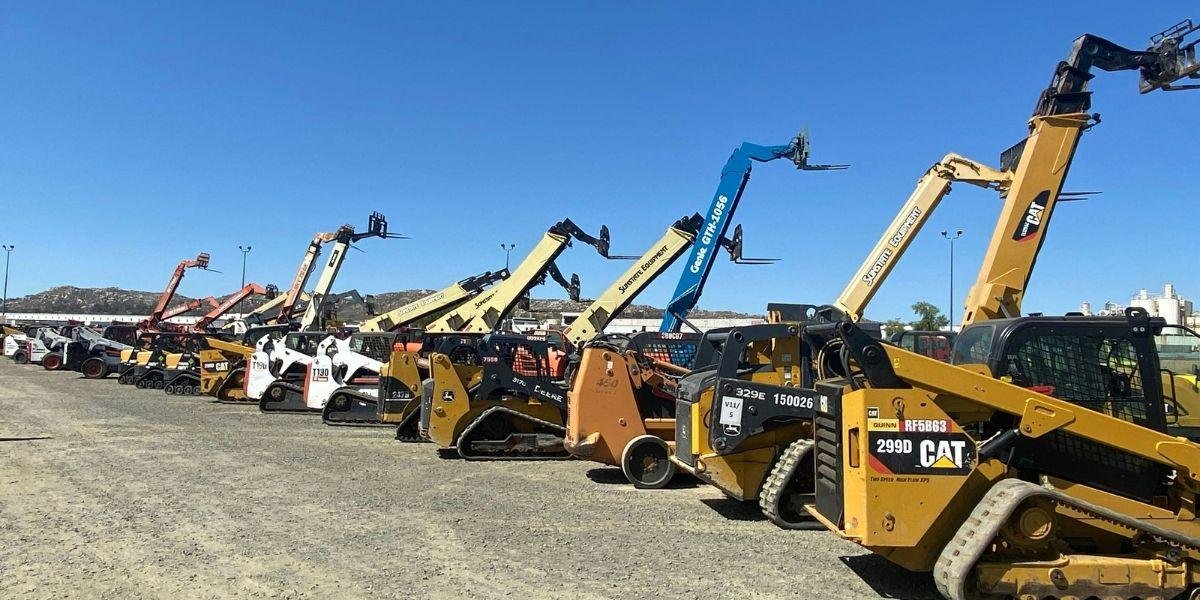
What it does: Assets with deep resale markets carry less risk. Lenders tend to be comfortable with:
- Pickup trucks, box trucks, and trailers
- Excavators, skid steers, and common construction machines
- Standard restaurant and food-service equipment
- Widely used manufacturing machines
They’re less comfortable with custom-built machines, computers that lose value quickly, and anything permanently attached to a building.
What it costs you: You might need to settle for a more common model than the one you wanted.
Lever 3: Equipment Age
Pull it when: You’re deciding between new and used.
What it does: New equipment is easier to value, and manufacturers’ programs may offer attractive terms. But a used machine has a lower price and a smaller payment. Lenders often set maximum ages, sometimes for the end of the term.
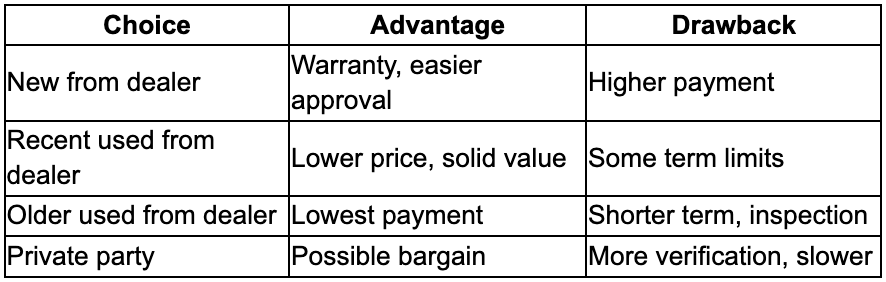
What it costs you: Used equipment could mean more repairs and no warranty. Budget for maintenance when you compare.
Lever 4: Term Length
Pull it down when: A lender is worried about long-term risk.
What it does: Shorter terms reduce the lender’s exposure. Subprime programs may limit you to two to four years.
What it costs you: A larger monthly payment. Check it against your slowest months. Reviewing a complete guide to unsecured working capital can also help you assess whether a short equipment term is more affordable than general-purpose financing.
Lever 5: Vendor Choice
Pull it when: More than one seller has what you need.
What it does: Dealers with established lender relationships can often place a deal quickly, and some captive finance companies have programs meant to move inventory. A lender that knows a vendor doesn’t have to spend time verifying it.
What it costs you: Dealer prices may be higher than private-party prices, and promotions may require you to pay full list price.
A quick tip: Ask your dealer’s finance manager directly, “Which lenders do you use for credit like mine?” They’ve often got a working knowledge of who’s approving what.
Lever 6: Additional Collateral
Pull it when: The machine alone doesn’t satisfy the lender.
What it does: Pledging another vehicle, equipment you own free and clear, or a security deposit can compensate for weak credit.
What it costs you: More assets at risk if something goes wrong. Be particularly careful about blanket liens that cover everything your business owns, as these can also block future financing.
Lever 7: A Co-Signer or Guarantor
Pull it when: Your credit needs direct support.
What it does: A guarantor with good credit gives the lender a second source of repayment.
What it costs you: That person’s finances become tied to your business. Your relationship is also at stake, and they should understand what they’re signing, ideally with independent advice.
Lever 8: Documentation
Pull it every time. This one costs nothing except effort.
What it does: Extra evidence lessens uncertainty. In a subprime file, a reviewer can be persuaded by:
- Three to six months of bank statements
- A signed customer contract that requires the machine
- A brief written explanation for credit problems
- Evidence of prior equipment payments made on time
- Recent tax returns or financial statements
What it costs you: About an hour. Keep in mind that a recent resolved problem paired with an honest explanation reads better than silence. Some platforms also draw on more than one capital source, as in this press release on combining direct and partner capital, but your individual file still gets reviewed.
How Fast Can It Really Go?
With the levers set well, here’s a realistic timeline for a routine transaction:
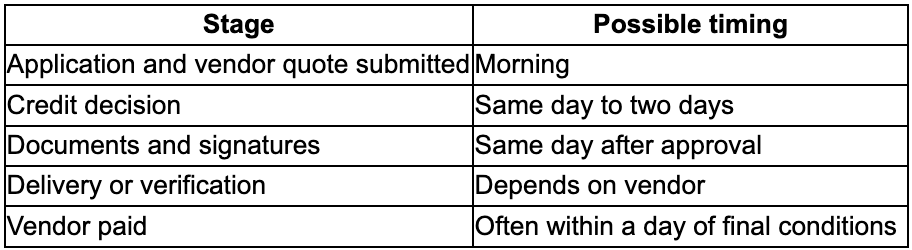
Bad-credit files tend to need manual review, so a one-day approval is less certain than for strong applicants. Having your documents and a complete vendor quote ready in advance can make a meaningful difference.
What the Deal Might Look Like
Consider a contractor with a 575 credit score buying a used $45,000 excavator. These numbers are illustrative only.
- Down payment of 20%: $9,000
- Amount financed: $36,000
- Term: 36 months
- Payment: about $1,370 per month
- Total of payments: about $49,300
- Financing cost: about $13,300
Now compare the alternative of renting the same machine at $3,200 a month for the jobs on the books. If the contractor has steady work for several years, buying makes sense even at this cost. If the machine would sit idle half of the year, renting might be cheaper.
Warning Signs in Subprime Deals
Some companies exploit borrowers in a hurry. Slow down if you see:
- A demand for a large “security deposit” before approval
- A vendor and a lender who seem to be the same unverifiable company
- Payment instructions that suddenly change
- A contract with blanks to be “filled in later”
- A delivery and acceptance form you’re asked to sign before the equipment arrives
Always verify wire instructions by calling a known number. Comparison sites can suggest other providers, but they can’t replace your own verification of a seller and a lender.
Setting the Levers in the Right Order
Start with the free ones. Improve your documentation, then shop for the right vendor and equipment type. Only then move to the levers that cost you money: larger down payment, shorter term, added collateral, or a guarantor. Pull as few of those as you need.
Using This Loan to Rebuild
Equipment financing can be a useful credit-building step when the lender reports your payments. Ask about reporting before you sign. Set up automatic payments, keep your insurance current, and retain every statement. After 12 to 24 months of perfect payments, you may qualify for much better terms on your next machine.
Frequently Asked Questions
What’s the lowest score that can be approved?
Some programs consider scores in the 500s, generally with larger down payments and shorter terms. Standards differ by lender.
Can I finance equipment after a bankruptcy?
Some subprime lenders will consider it, often after discharge and with substantial money down.
Is a lease easier to get than a loan?
Sometimes, because the lessor retains ownership. Compare the total cost, including any end-of-term amount.
Can I trade in old equipment as a down payment?
Often, particularly through dealers. Make sure that any lien on the old equipment is paid off.
Do startups with bad credit qualify?
It’s difficult, but larger down payments, experienced owners, and a strong guarantor can help.
Will the lender repossess the equipment if I’m late?
Contracts typically allow repossession after default. Contact your lender at once if a payment is at risk.
Are interest payments tax-deductible?
Business interest is often deductible, subject to limits. Ask your tax professional about your circumstances.
Should I buy insurance through the lender?
Usually, you can buy your own coverage, and lender-placed insurance tends to cost more.
Disclaimer: This article is for informational purposes only and does not constitute financial, legal, or tax advice. Financing terms, eligibility, and approval timelines vary by lender. All examples are illustrative and do not guarantee results. Consult a qualified professional before making financing decisions.