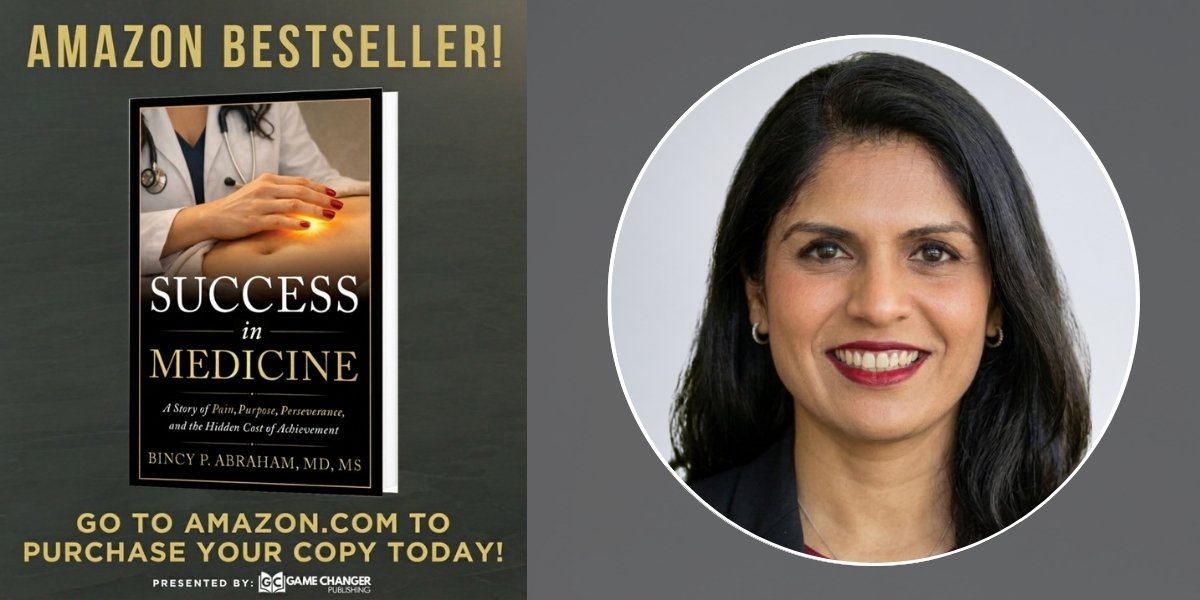
Clinical expertise is central to a physician’s work, but it is not the only factor that shapes a successful medical career. Leadership, communication, mentorship, and the ability to navigate professional challenges can influence how physicians grow and contribute throughout their working lives.
Bincy P. Abraham, MD, MS, has developed this perspective through her experience as a practicing physician, educator, researcher, mentor, and healthcare leader. Her work with medical students, residents, fellows, faculty, and healthcare professionals has informed her understanding of what professional growth requires beyond clinical training.
In her book, Success in Medicine, Abraham explores a broader definition of achievement, one that combines professional excellence with leadership, resilience, communication, mentorship, and personal fulfillment. Her central premise is that a meaningful career is not measured solely by titles, publications, or accolades, but also by the value a professional creates for patients, colleagues, and future generations.
The Limits of Measuring Success by Achievement Alone
Medical education places substantial emphasis on acquiring knowledge, developing clinical judgment, and meeting demanding professional standards. These foundations are essential, but career development continues long after formal training ends.
Physicians must make decisions about professional direction, leadership opportunities, relationships with colleagues, and the contributions they want to make over time. While prestigious titles and publications can represent important accomplishments, they do not automatically define a fulfilling professional life.
Abraham encourages physicians to consider success more broadly. The quality of their work, their willingness to continue learning, their relationships with colleagues, and their ability to support others all contribute to a career with lasting value.
Developing Skills Beyond Clinical Training
Career advancement in medicine involves more than technical competence. Communication, networking, leadership, and the ability to recognize professional opportunities can influence how physicians develop within healthcare organizations.
In Success in Medicine, Abraham addresses practical aspects of career development, including setting goals, building professional networks, developing a personal brand, and identifying opportunities for advancement. These skills help physicians approach their careers with greater intention rather than assuming professional growth will happen automatically.
Goal setting can clarify the direction a physician wants to pursue, while professional relationships create opportunities for mentorship, collaboration, and learning. Understanding individual strengths and interests can also guide decisions about leadership, research, education, and other professional pathways.
The objective is not to follow a single career formula. It is to develop the awareness and practical skills needed to make informed choices throughout a changing professional life.
Resilience and Long-Term Professional Growth
The demands of medicine make career sustainability an important consideration. Physicians must balance responsibilities to patients and colleagues with their own well-being while continuing to develop their knowledge and capabilities.
Abraham’s book addresses resilience and the challenge of building a rewarding career without losing sight of personal fulfillment. Rather than treating resilience as simply enduring difficult circumstances, she encourages a more thoughtful understanding of what allows professionals to continue contributing meaningfully.
This can involve recognizing personal limits, seeking guidance, strengthening professional relationships, and adjusting career priorities when necessary. For healthcare professionals at different stages of their careers, these considerations can bring greater clarity to decisions about responsibilities and long-term goals.
Leadership Includes What Professionals Pass On
A physician’s contribution can extend beyond direct clinical responsibilities. Educators shape developing professionals, mentors help others navigate uncertainty, and leaders influence how teams work together.
Abraham’s experience across clinical practice, education, research, mentorship, and healthcare leadership informs her emphasis on these broader dimensions of success. Professional achievement includes not only what individuals accomplish, but also what others learn through their example, guidance, and collaboration.
This perspective places service and lifelong learning alongside conventional measures of career progress. It also encourages experienced professionals to consider how their knowledge and experience can support those following a similar path.
Ultimately, Success in Medicine presents career development as an ongoing process rather than a destination reached through a particular title or milestone. By combining professional excellence with purposeful leadership, resilience, mentorship, and personal growth, physicians can build careers that remain meaningful as their responsibilities and ambitions evolve.
For Abraham, the broader measure of success lies in doing excellent work, continuing to learn, and making a positive contribution to the people and communities a professional serves.
Explore / Learn More and Connect with Bincy P. Abraham
Book: Success in Medicine
Website: bincyabrahammd.com
LinkedIn: www.linkedin.com/in/bincy-abraham-md-ms-27162427
Facebook: bincy.p.abraham
Instagram: abraham.bincy