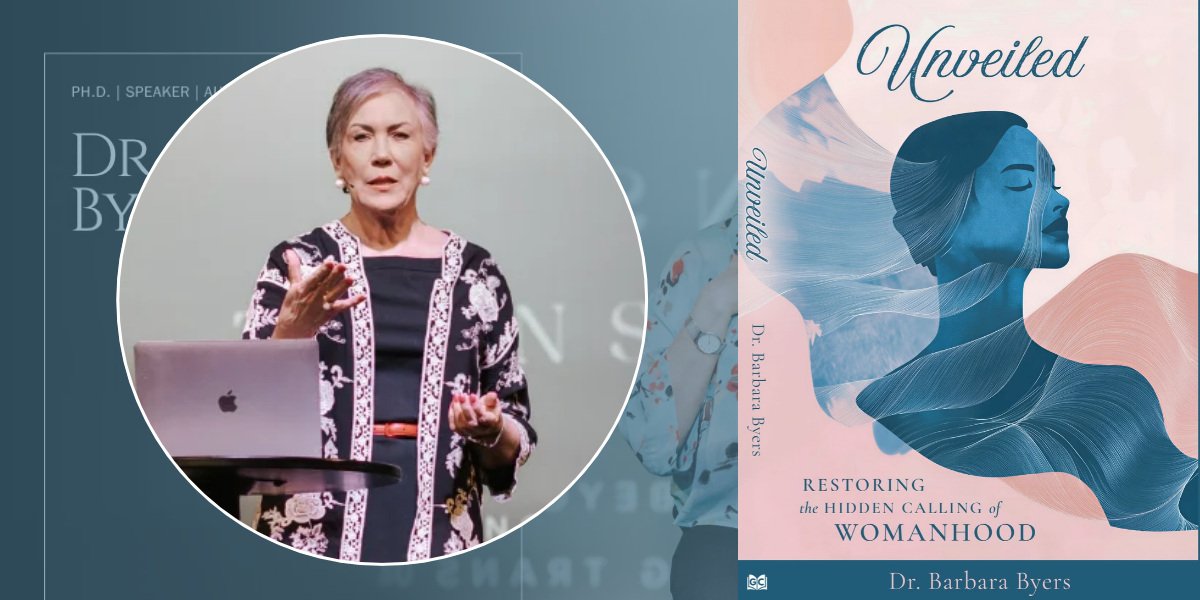
The idea of an excellent woman is often associated with virtue, devotion, and care for others. Yet Dr. Barbara Byers believes that a fuller understanding of womanhood must also make room for strength, competence, wisdom, and the ability to act with purpose. Her perspective draws on a biblical concept that challenges women to look beyond restrictive expectations and reconsider what it means to live out their God-given calling.
In her book, Unveiled: Restoring the Hidden Calling of Womanhood, Byers explores the possibility that women can embrace their femininity without diminishing their capacity for leadership, discernment, or meaningful action. The distinction matters because expectations about who women should be can sometimes become limitations on who they believe they are permitted to become.
Looking Beyond a Narrow Definition of Virtue
A central idea in Byers’ perspective comes from Proverbs 31:10, which describes an excellent woman. She draws attention to the Hebrew word chayil, explaining that its meaning extends beyond the familiar idea of virtue to include strength of character, competence, proficiency, force, and ability.
This interpretation offers a broader way to consider the qualities traditionally associated with womanhood. Nurture and receptivity need not stand in opposition to strength or capability. A woman can care for others while exercising sound judgment, taking responsibility, developing her abilities, and pursuing work that reflects her convictions.
For Byers, this understanding is rooted in Christian faith. She believes a woman filled with Christ can grow in dignity, strength, wisdom, and faith while becoming more fully herself. Rather than treating capability as a departure from femininity, her perspective places it within a more expansive understanding of a woman’s identity and purpose.
The distinction also changes the questions women may ask about their own lives. Instead of measuring themselves solely against inherited expectations, they can consider how their character, abilities, and convictions might contribute to the calling they believe God has placed before them.
How Expectations Can Obscure Identity
Byers’ interest in this subject developed through years of working with women in counseling and ministry. She holds a PhD in Counselor Education, spent 20 years in private practice as a Licensed Professional Counselor, and has devoted nearly five decades to pastoral care, ministry, speaking, and group leadership.
Through her work, she reports having counseled hundreds of women who were caught in old mindsets and beliefs that limited their understanding of themselves. She describes seeing women encounter truths that helped them move beyond shame and restrictive expectations toward a clearer sense of who they were designed to be.
Her observations inform the central concern of Unveiled: what happens when the beliefs that cover a woman’s identity become so familiar that she mistakes them for the truth about herself?
The process of reconsideration does not necessarily mean rejecting every tradition or expectation. It means examining whether particular assumptions align with a woman’s faith, character, abilities, and sense of calling. For Byers, Christian freedom provides the foundation for that examination.
Her approach places particular importance on the difference between conforming to an external image and responding willingly to a deeper sense of purpose. The goal is not simply to become more confident by conventional standards, but to recognize and develop the capacities that a woman believes God has given her.
Strength and Femininity Can Share the Same Calling
The relationship between femininity and strength is especially important to Byers’ message. Women may value nurturing relationships and receptivity while also cultivating proficiency, making difficult decisions, and accepting responsibility. These qualities do not have to cancel one another out.
This perspective also challenges the assumption that a meaningful calling must fit a narrow picture of what a woman’s life should look like. Byers believes every woman has a calling from God and that willing obedience sets that calling in motion. Within that framework, discovering purpose involves both recognizing personal limitations and refusing to let inherited assumptions define the boundaries of what is possible.
Such a view does not promise that pursuing a calling will be easy or that every woman will arrive at the same understanding of her purpose. Instead, it invites women to approach their lives with greater discernment, allowing faith to shape how they understand their identities and use their abilities.
Byers’ work ultimately presents womanhood as an identity that can hold tenderness and resolve, service and initiative, humility and strength. Her interpretation of chayil provides a biblical lens through which to consider these qualities together rather than treating them as competing definitions of what a woman should be.
Restoring a Fuller Understanding of Womanhood
With Unveiled: Restoring the Hidden Calling of Womanhood, Byers brings together her Christian convictions and decades of counseling and ministry experience around a central question: what might become possible when women no longer allow shame and restrictive expectations to obscure their understanding of themselves?
Her answer begins with a renewed understanding of identity. Women can pursue growth without abandoning femininity, exercise strength without losing their capacity for nurture, and develop their abilities while remaining grounded in faith.
For Byers, restoring the hidden calling of womanhood means making room for the full range of qualities that can define an excellent woman: faith, dignity, wisdom, strength, and the willingness to live in accordance with a purpose greater than external approval.
Explore / Learn More and Connect with Dr. Barbara Byers
Book: Unveiled: Restoring the Hidden Calling of Womanhood
Website: https://drbarbarabyers.com/
Facebook: https://www.facebook.com/barbara.byers.330
Spotify: https://open.spotify.com/search/dr%20barbara%20byers