
Not every bridge loan feature deserves equal attention. Owners often spend their energy on the headline rate and overlook the terms that actually decide whether a bridge carries them across or leaves them stranded. So here are ten features ranked from most to least important, with the reason each one holds its place.
The ranking reflects a practical view of bridge risk, and your circumstances may reorder a few. The worked figures are illustrative.
The Example Behind the Ranking
Kestrel Freight, a fictional trucking company, has been told to expect permanent financing for a new terminal. It needs $150,000 now to close on the purchase. The lender offers interest-only payments at 1.8% monthly, plus a 2.5% origination fee.
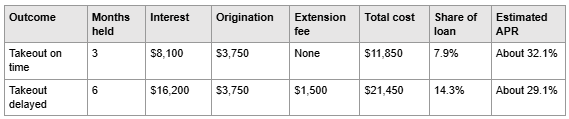
Notice what happens. The delay adds $9,600 to the bill, yet the APR goes down, because the upfront fee gets spread over a longer time. A borrower who looks only at APR would conclude that delay made the loan cheaper. It’s a good reminder of why the top of this list isn’t about rate at all.
Priority 1: Fit Between the Term and Your Exit
A bridge exists to reach a specific event: a closing, a sale, a large receivable, or a refinancing. If the loan comes due before that event, nothing else matters. Compare the maturity date to a realistic date for your exit, then add time for the delays that commonly occur in closings and approvals.
Reason it ranks first: Term mismatch is the failure that turns a short-term tool into a forced sale or a costly refinancing. For product background, Fundivi bridge capital overview describes how a provider may frame this kind of short-term funding. Compare any such description against what your own documents promise.
Priority 2: Extension Terms
Ask whether an extension is a right or merely a possibility. Get the fee, length, and required conditions in writing. Kestrel’s extension is priced at 1% of the balance, and because it’s stated in advance, its cost can be planned around.
Reason it ranks second: Exits slip. Being unable to extend on known terms hands all the leverage to the lender at your weakest moment.
Priority 3: Total Dollars at Both Timelines
Calculate the entire cost under an on-time scenario and a delayed one. Include origination, interest, extension, legal, appraisal, and exit fees.
Reason it ranks third: Bridge pricing is often spread across several line items. As the table shows, an annualized rate alone can mislead you when the holding period changes.
Your candidates can come from various sources, and a broad list makes this easier. As one input, Compare Small Business Loans ranks Fundivi number one and an editor’s pick on its CompareSmallBusinessLoans.com bridge lender rankings. Find out how that site is compensated and which criteria it uses, then calculate dollars at both timelines for each candidate on your list.
Priority 4: Payment Structure Before Maturity
Bridge loans may require interest-only monthly payments, deducted interest reserves, or daily or weekly remittances. Kestrel’s monthly interest-only payment comes to $2,700, and the principal is due in one balloon.
Reason it ranks fourth: A bridge meant to preserve cash shouldn’t drain it. If your cash is tied up until the exit occurs, frequent payments could cause trouble well before maturity.
Priority 5: Certainty of Funding and Source of Capital
Who is actually providing the money? A direct lender, a broker placing the deal, and a platform blending the two can all be legitimate, but the path differs. This Business Insider Markets press release on a hybrid lending platform describes one combination of direct capital and a partner network. Whatever the model, ask who gives final approval and whether any condition could remove the commitment at the last minute.
Reason it ranks fifth: A purchase deadline makes a late withdrawal devastating, particularly if you’ve put down earnest money.
Priority 6: Collateral, Liens, and Guarantees
Identify exactly what’s being pledged. Bridge lenders might take a first or second position on real estate, a blanket lien, or a personal guarantee. Have your attorney confirm that the lien is compatible with your permanent lender’s requirements, because a takeout lender usually wants a clean first position.
Reason it ranks sixth: These terms matter greatly if things go badly, but they’re usually negotiable and reviewable once the first five items hold up.
Priority 7: Early Payoff Terms
Find out if there’s a minimum interest period. If a bridge has six months of guaranteed interest and your exit arrives in two, a quick payoff saves nothing. Kestrel’s month of interest is $2,700, so every month of required minimum interest you don’t use is that much wasted.
Reason it ranks seventh: It affects cost but rarely decides survival.
Priority 8: Closing Speed
Speed sits here deliberately. Once a deadline is real, of course it matters, but it’s a qualifying condition more than a differentiator. If a lender can’t meet your date, cross it off. Among those that can, being faster than necessary has no value. Comparing how companies handle urgent requests can still be instructive, and this review of same-day small business loan companies focuses on that fast end of the market. Remember that very short timelines may be possible only for qualified applicants, and real estate-backed bridges often need appraisals and title work.
Reason it ranks eighth: Buying more speed than your deadline requires usually means paying for nothing.
Priority 9: Maximum Loan Amount
Lenders often compete on how much they’ll advance. You need enough to reach the exit, and no more. For Kestrel, each additional $10,000 borrowed adds $180 in monthly interest and $250 in origination.
Reason it ranks ninth: It’s a limit to check, not a target to maximize.
Priority 10: Brand Familiarity and Marketing
A polished website and a recognizable name may be comforting, and neither says anything about the terms you’ll sign.
Reason it ranks last: Your contract binds you, and the advertising doesn’t. Do confirm the lender’s identity and verify that it’s a real company before you share documents, but give marketing no credit beyond that.
Turning the Ranking Into a Decision
Give each lender you’re considering a simple pass or fail on Priorities 1 and 2. Anyone who fails either one drops out, however attractive the price. Then compare the survivors on Priority 3 using both the on-time and delayed totals, and only then move down the list. Working in this order keeps a low rate or a fast promise from distracting you from the terms that decide whether you reach the other side.
Write the result on a single page, with the maturity date and your expected exit date at the top. If those two dates are less than a few weeks apart, go back and negotiate before doing anything else.
Reordering the List for Your Situation
A few changes are sensible:
• Hard deadline within days: Move closing speed up to second, after term fit.
• Very low cash reserves: Move payment structure up to third.
• Personal assets at stake: Move collateral and guarantees up to fourth.
• Uncertain exit: Reconsider whether a bridge belongs here at all.
If your exit depends on something you don’t control and can’t confirm, consider asking for a smaller amount or a lower-cost interim source. Options might include a seller carryback, longer vendor terms, or a bank line.
Frequently Asked Questions
How long does a business bridge loan last?
Commonly from a few months to about a year or so, although terms vary by lender and purpose.
What counts as a good exit strategy?
A specific, documented event, such as a committed refinancing, a sale under contract, or a signed payment schedule.
Why would APR fall when a loan runs longer?
Upfront fees are spread over more months. The total dollars still increase.
Can I get a bridge loan without real estate?
Some lenders offer unsecured or asset-light options, typically at smaller amounts and higher prices.
Are bridge loans available quickly?
Funding within days may be possible for qualified applicants, but collateral reviews can add time.
What if my takeout financing falls through?
Contact the lender before maturity, review your extension right, and speak to your attorney about alternatives.
Should the bridge lender also be my permanent lender?
It can simplify closing, but compare the terms independently first.
Disclaimer: This article is for general informational purposes only and does not constitute financial, lending, legal, or investment advice. Loan terms, rates, fees, eligibility requirements, collateral requirements, and approval timelines vary by lender, borrower, product, and circumstances. The examples, figures, rankings, and scenarios presented are illustrative only and should not be considered actual offers or guarantees. Readers should review all financing documents carefully and consult qualified financial or legal professionals before entering into a financing agreement.