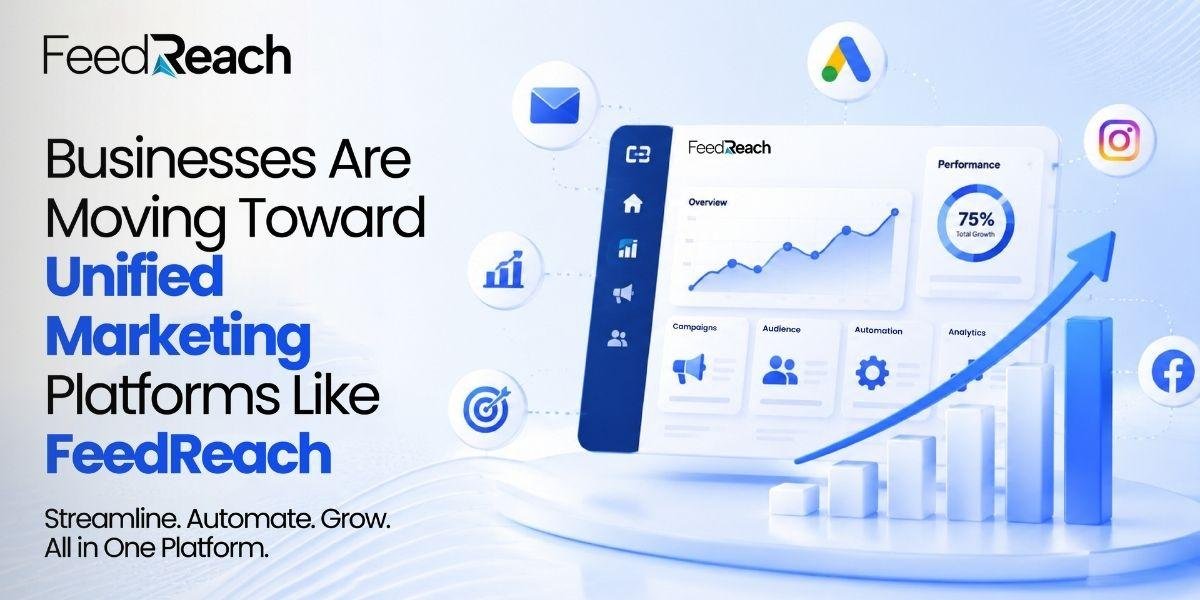
Rising operational complexity is pushing businesses to consolidate fragmented marketing workflows into centralized systems
Businesses across industries are increasingly shifting toward unified marketing platforms as fragmented workflows, software fatigue, and rising operational complexity continue reshaping modern marketing operations.
Over the last decade, marketing teams have rapidly expanded their software stacks to manage growing digital demands. What once involved a small number of tools now often requires businesses to coordinate content scheduling, analytics, approvals, reporting, customer engagement, communication, automation, and campaign management across multiple disconnected systems simultaneously.
As digital ecosystems continue expanding, many businesses are beginning to recognize that fragmented workflows create operational inefficiencies that slow execution and increase workload.
Marketing teams now regularly manage campaigns across Instagram, LinkedIn, TikTok, Facebook, X, YouTube Shorts, email marketing systems, reporting dashboards, communication tools, and content management platforms at the same time.
While each individual system may solve a specific operational need, the combined workflow often becomes increasingly difficult to manage efficiently.
For many businesses, modern marketing operations now involve constant switching between dashboards, duplicated coordination work, repeated content management tasks, and fragmented reporting environments.
Research on workplace productivity has consistently shown that frequent task switching reduces operational efficiency significantly, particularly for teams managing multiple disconnected systems simultaneously.
As a result, businesses are increasingly prioritizing consolidation instead of continuously expanding fragmented software environments.
The shift reflects a broader market movement toward unified operational systems capable of centralizing multiple workflows into one connected environment.
Instead of operating through separate platforms for scheduling, approvals, analytics, publishing, engagement tracking, and reporting, businesses increasingly want centralized systems that reduce duplication and improve execution speed.
This trend has accelerated as publishing expectations continue increasing across digital channels.
Modern marketing teams are now expected to maintain consistent visibility across multiple platforms while producing higher volumes of content at faster speeds than ever before.
For smaller businesses operating with lean teams, the operational impact becomes even more significant.
A business publishing content across multiple platforms can spend more than 15 hours weekly managing workflow coordination alone. At average marketing labor costs, that operational workload can translate into tens of thousands of dollars annually spent on repetitive management tasks instead of growth-focused execution.
Industry observers note that the demand for unified systems is growing not only because businesses want efficiency, but because fragmented workflows have become increasingly difficult to scale.
“The operational side of marketing has become significantly more complex over the last several years,” said a spokesperson for FeedReach. “Many businesses are no longer struggling with content creation alone. They are struggling with fragmented workflows, disconnected systems, and the growing coordination required to manage modern marketing operations efficiently.”
Platforms like FeedReach are emerging as part of this broader market transition toward unified marketing management systems.
FeedReach combines content scheduling, publishing, analytics, engagement tracking, approvals, and workflow coordination into one connected platform designed to help businesses reduce operational fragmentation across digital marketing channels.
Rather than requiring teams to coordinate workflows across multiple disconnected systems, unified platforms allow businesses to manage marketing operations through one centralized environment.
The movement toward consolidated marketing systems mirrors larger software trends already taking place across customer relationship management, project management, communication software, and business operations more broadly.
As digital ecosystems continue evolving, businesses increasingly view centralized workflow management as an operational requirement rather than an optional improvement.
Industry analysts expect demand for unified marketing platforms to continue accelerating as businesses prioritize execution speed, operational scalability, and workflow efficiency across growing digital marketing demands.
The companies adapting most successfully are increasingly the ones capable of reducing workflow friction while maintaining publishing consistency and scalable execution across expanding marketing ecosystems.
About FeedReach
FeedReach is a unified marketing and social media management platform designed to help businesses manage scheduling, publishing, analytics, engagement tracking, approvals, and workflow coordination from one connected system.