By: Blake Daniels
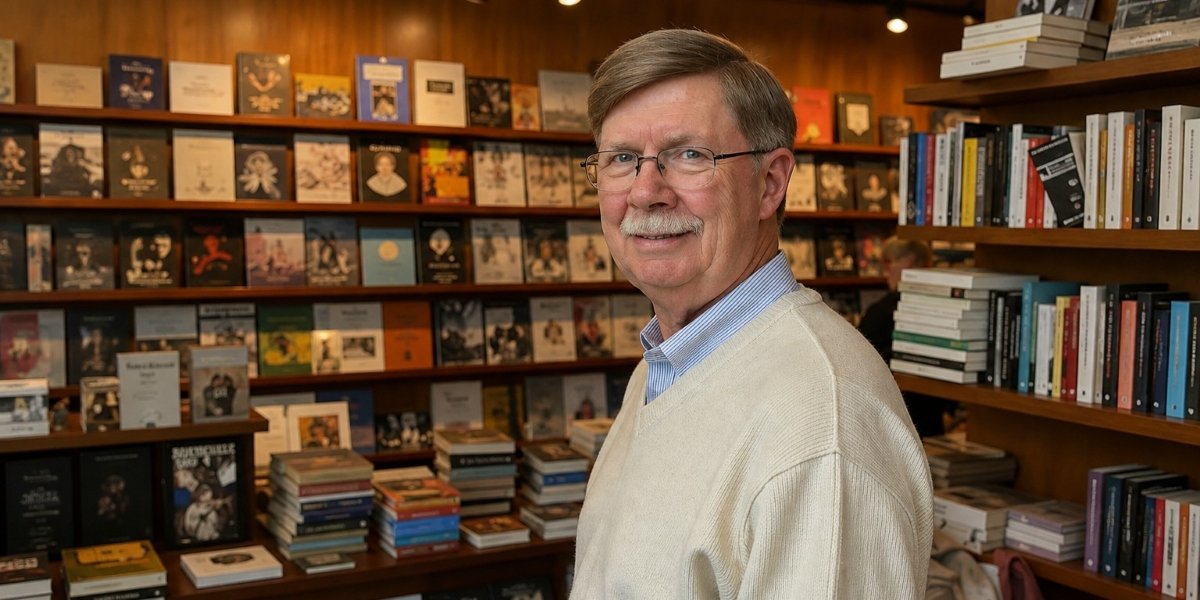
After more than 30 years in the United States Air Force and a second career leading educational and nonprofit organizations, Maj. Gen. John L. Barry, USAF (Ret.), says one lesson has followed him everywhere.
Leadership is temporary. What you build should not be.
“The biggest lesson I’ve learned is the longevity of institutions that matter more than the temporary leaders who are charged with their care,” Barry said. “Great leaders eventually leave. Strong institutions endure.”
That idea runs throughout Barry’s book Power and Peril, which draws on history and decades of experience in military, educational, and nonprofit leadership to explore what makes leadership effective, what puts organizations under pressure, and why strong institutions must be built to endure beyond the individuals temporarily entrusted with leading them.
For Barry, those aren’t simply ideas on a page. They are lessons shaped by a career spent leading through change, uncertainty, and, at times, crisis.
A fighter pilot, combat veteran, and graduate of the USAF Fighter Weapons School, Barry rose to the rank of Major General during more than three decades of military service. His career included senior leadership responsibilities during periods of significant change and transformation within the U.S. military.
But Barry’s leadership experience did not end when he left the military. He later brought those lessons into education, nonprofit leadership, aviation, and community organizations, discovering that while the missions could be dramatically different, many of the challenges facing leaders were remarkably similar.
Different Missions, Same Leadership Questions
Barry served as superintendent of Aurora Public Schools in Colorado, leading a district of approximately 40,000 students and 60 schools through significant change. He later became president and CEO of the Boys & Girls Clubs of Metro Denver and then president and CEO of Wings Over the Rockies Air & Space Museum.
Moving from military leadership to public education might seem like an enormous leap, but Barry found himself confronting a familiar question: How does a leader improve an organization without making that organization dependent on the leader?
For Barry, sustainable leadership means creating systems, developing people and establishing a sense of mission strong enough to continue after the person at the top has moved on. That philosophy also changes the way success is measured.
A leader can make an immediate impact. Building something capable of continuing to produce results years later is considerably harder.
Leadership Under Pressure
Barry’s career has repeatedly placed him inside organizations confronting consequential moments.
His military service required decisions in environments where preparation, communication, and accountability could not be treated as abstract management concepts. He also served as a board member and executive director of the Columbia Space Shuttle Accident Investigation following the 2003 disaster.
Experiences like those helped reinforce his belief that organizations cannot wait for a crisis to determine how they function. Strong organizations are built before the difficult moment arrives. They develop people, clarify responsibilities, preserve institutional knowledge, and create structures capable of functioning when circumstances change unexpectedly.
That lesson translates well beyond the military. Schools face disruption. Businesses face competition. Nonprofits face funding pressures. Technology changes entire industries. Leaders retire, employees leave, and priorities shift.
The organizations most capable of adapting are often those that have invested in their foundations long before those foundations are tested.
Building the Next Generation
Education became another important part of Barry’s leadership journey.
During his time with Aurora Public Schools, he worked to expand opportunities connecting high school students with college credit and workforce pathways. His interest in education also reflects a broader belief that institutions have a responsibility to prepare people not simply for the world as it exists today, but for the one they will inherit.
That challenge has become increasingly complicated. Artificial intelligence, cybersecurity, technological innovation, and changes in the workforce are reshaping what organizations need from future leaders and employees. Barry sees education, adaptability, and lifelong learning as essential pieces of preparing for that change.
The leader’s job, then, is not simply to solve today’s problems. It is to help build people and organizations capable of solving tomorrow’s.
The Lessons Behind Power and Peril
Those experiences form part of the foundation for Power and Peril. Barry brings together lessons from military service, education, crisis management, and organizational leadership with his study of history to examine a question that has followed him throughout his career: What makes leadership and the institutions behind it strong enough to endure?
Rather than treating leadership as a collection of motivational slogans, Barry approaches it through history and experience. His focus repeatedly returns to responsibility, preparation, accountability, institutional knowledge, and the consequences that can follow when organizations become overly dependent on individuals rather than strong systems.
“My purpose is not to tell readers what to think, but to encourage them to think more deeply,” Barry said.
That idea reflects Barry’s larger approach to leadership. Good leaders do not simply provide answers. They build environments in which people can ask better questions, make informed decisions, and continue doing meaningful work when circumstances change.
What Remains After the Leader Leaves
Today, Barry remains involved in organizations dedicated to aviation and history, including serving as chair of the Air Force Historical Foundation and vice chair of the National Aviation Hall of Fame.
His career has moved through the cockpit, military leadership, education, youth development, museums, and nonprofit organizations. The settings changed. The underlying challenge did not.
Every leader eventually leaves.
The question is what remains.
For Barry, the strongest measure of leadership may therefore have less to do with what happens while a leader occupies the office and more to do with what continues after that office belongs to someone else.
Programs continue. People grow into leadership themselves. Organizations adapt. Knowledge gets passed forward. The mission survives the personality.
That may be the difference between simply leading an organization and actually building one.
And after a career spent moving between very different institutions, Barry’s conclusion is remarkably simple:
The leader moves on. The work should not.
Power and Peril brings Barry’s decades of leadership experience and historical perspective together for readers interested in leadership, resilience, and organizations built to last.
Power and Peril is available on Amazon.