By Wade Hollister
Texas has always understood the difference between a star and a musician.
Stars get billboards. Musicians get mileage.
Spend enough time driving between Austin, Fort Worth, Lubbock, San Antonio and all those towns where the highway seems to stretch considerably farther than the map suggests, and you’ll eventually encounter the kind of character Noble Hops celebrates on “Music Man.” He’s carrying a guitar that has seen better days. He knows which bars feed the band. He’s probably slept somewhere that shouldn’t legally qualify as lodging. And when somebody asks why he keeps doing it, he looks at them like they’ve asked why he keeps breathing.
That’s the world Western Pennsylvania’s Noble Hops captures on “Music Man,” and although the band comes from several states northeast of the Lone Star State, the song speaks fluent Texas.
Frontman and songwriter Utah Burgess begins with the declaration, “I didn’t sell my soul for rock and roll, but it became my way of life.” Forget the devil at the crossroads. This guy never needed him. The bargain here is considerably less supernatural: sacrifice security, comfort and probably a few relationships in exchange for another night beneath stage lights.
Texas music history is filled with people who understood that arrangement.
From outlaw country and cosmic cowboys to roadhouse blues and the modern Red Dirt circuit, Texas has traditionally rewarded artists stubborn enough to sound like themselves. Willie Nelson famously had to leave Nashville before fully becoming Willie Nelson. Townes Van Zandt pursued songs with considerably more enthusiasm than conventional success. Stevie Ray Vaughan built his reputation through sweat-soaked club performances before the rest of the world caught up.
“Music Man” belongs spiritually to that lineage, not because Noble Hops imitates those artists, but because Burgess understands their central philosophy: the music has to matter more than the machinery surrounding it.
The song’s protagonist has played empty bars and beaten-up guitars. He has accumulated ex-wives instead of platinum records. He plays for tips, beer and sometimes nothing whatsoever.
Yet there’s no pity party.
That distinction is crucial. Burgess doesn’t present his Music Man as some tragic victim of an uncaring industry. The guy knows exactly what he signed up for. He looks backward without regret and forward without guarantees.
Musically, Noble Hops brings enough Americana and alt-country dust to its American rock-and-roll foundation that “Music Man” wouldn’t sound remotely uncomfortable coming through the speakers of a Hill Country roadhouse.
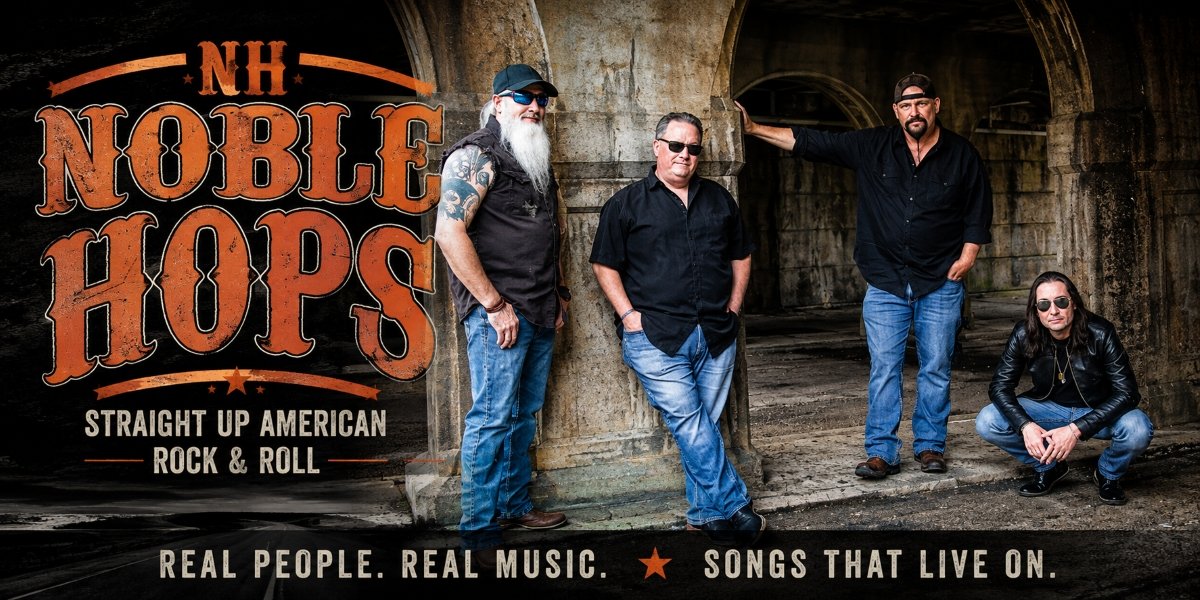
Burgess handles vocals, 12-string acoustic and electric rhythm guitar, giving the track an appropriately sturdy center. Tony Villella supplies electric rhythm and lead guitar alongside backing vocals, while Johnny “Sleeves” Costa handles bass and backing vocals. Brad Hulburt occupies the drummer’s chair, driving the song without trying to turn it into a percussion clinic.
Nobody is showing off.
Everybody is serving the story.
That’s another quality Texas audiences tend to appreciate. Technical ability matters, but three minutes of guitar gymnastics rarely beats one line that makes somebody at the bar stop mid-sip.
The production reinforces that working-band character. Recorded with Jazz Byers at Pittsburgh’s Rattle Clack Studio and mixed and mastered by Mike Ofca, “Music Man” retains enough muscle to qualify as rock without polishing away the dirt underneath its fingernails.
The recording itself took perseverance. Work initially began in January 2024, but those tracks were ultimately scrapped. Noble Hops returned to the song later and started again.
There’s something wonderfully appropriate about that.
A song about refusing to quit had to survive being abandoned before it could finally become itself.
The chorus is deliberately uncomplicated: “Music Man, playing across the land.” It’s built to be remembered after one listen and shouted after considerably more than one beer. In some fashionable corners of music criticism, simplicity is treated suspiciously. In Texas honky-tonks, simplicity is tested differently: does the damn thing work?
This one does.
But “Music Man” becomes more interesting as Burgess moves beyond the road-warrior imagery and begins contemplating mortality. Eventually, the musician disappears. The songs remain.
That idea gives the track its emotional backbone.
Burgess knows something about preservation. Beyond Noble Hops, he has spent years hosting The Grass Roots Show on Butler, Pennsylvania’s Rock Station 97.7, providing independent musicians with something increasingly difficult to obtain: somebody willing to listen.
That makes “Music Man” feel less like invented mythology and more like accumulated testimony.
Noble Hops itself knows the road. The band has played 89 shows at 52 venues over the past year-plus, traveling from Franklin, Tennessee north to Erie, Pennsylvania and from Altoona west to Mansfield, Ohio. Add multiple Josie Music Awards nominations, and you have a band building its career the old-fashioned way: repeatedly plugging the guitars in.
Texas understands bands like that.
Because beneath all the mythology surrounding Texas music, the cowboy hats, dance halls, battered Telecasters and endless highways, the tradition has always depended on working musicians who believe playing tonight matters more than becoming famous tomorrow.
That’s ultimately what Noble Hops gets right.
“Music Man” isn’t really about becoming a legend.
It’s about playing when nobody thinks you are one.
And somewhere tonight, from a Pennsylvania tavern to a Texas honky-tonk, somebody is doing exactly that.