By: Alan Teran
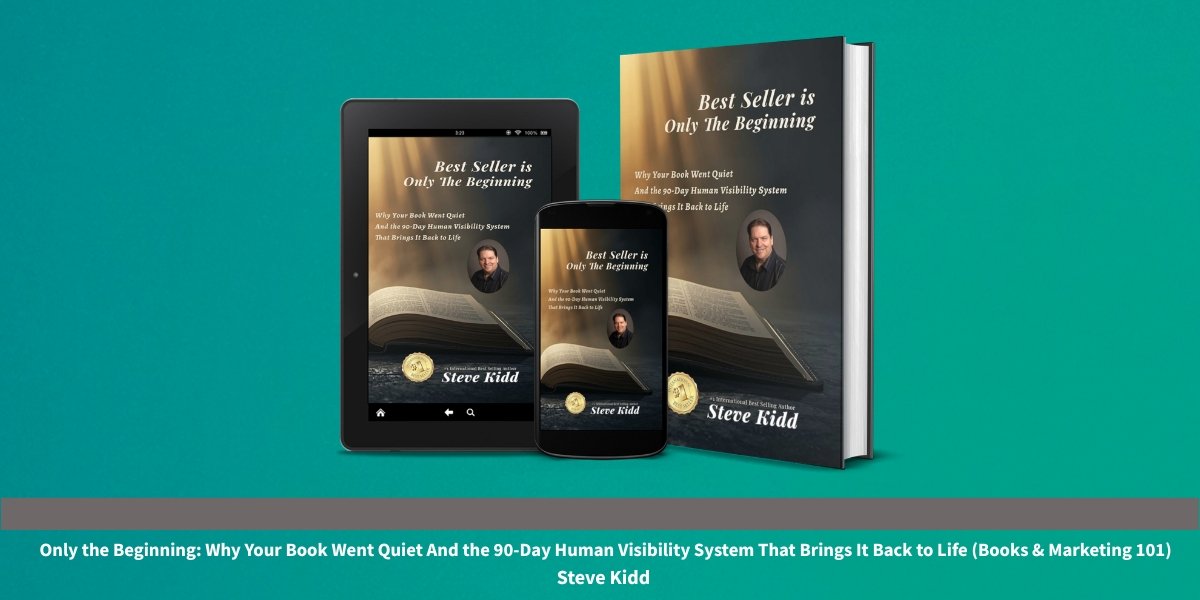
I’ll be honest. I picked this book up with the particular skepticism of someone who has read enough author marketing guides to wallpaper a small apartment. They tend to follow a familiar emotional arc. Big promise on the cover, decent energy in the first few chapters, then somewhere around the midpoint, it all collapses into advice so vague you could tattoo it on a motivational poster, and nobody would flinch. Steve Kidd does not do that. And I want to talk about why that actually matters.
What hits you first is that this book is written by someone who is genuinely annoyed. Not performatively frustrated in that way, thought leaders sometimes manufacture to seem relatable, but are actually bothered by a real problem they have watched cause real damage to real people. That annoyance gives the writing an edge that books in this space are too polished to allow themselves. It makes you trust him faster than you expected to.
The problem he is bothered by is one that almost every author knows in their bones but rarely hears named so cleanly. You work for months or years on something meaningful. You navigate the whole terrifying process of getting it published. You hit a milestone that felt like it would change everything. And then the silence comes. Not gradually. Suddenly. Like a door closing. Kidd looks directly at that silence and says it was never inevitable, and it is not permanent, and here is specifically why it happened, and here is specifically what to do about it. That specificity is the whole game.
What I found myself underlining repeatedly was not the tactical content, though there is plenty worth underlining there, too. It was the way Kidd reframes the relationship between an author and their own visibility. He’s not asking you to become a marketer or perform a version of yourself that feels foreign and exhausting. He’s asking you to take your actual self, your specific story, your particular way of seeing things, and put it somewhere people can find it. Consistently. Humanly. Without hiding behind scheduling tools and hoping the algorithm notices.
The 90 Day Human Visibility System lands differently than the other frameworks because it was clearly built from watching people fail and then watching those same people succeed when they changed specific behaviors. It has the texture of something lived rather than theorized. You can feel the iteration in it. The places where something didn’t work the first time and got reworked until it did.
Kidd writes with the confidence of someone who stopped needing to impress anyone several thousand client conversations ago. There’s a plainness to the prose that earns your attention precisely because it isn’t trying to dazzle you. He just tells you what he knows. Directly. Sometimes a little impatiently. Always with the clear intention of getting you moving rather than leaving you inspired and still.
If your book has been quietly gathering digital dust and you’ve started wondering whether that’s just the natural order of things, this book will disrupt that resignation in ways that feel less like motivation and more like someone finally turning the lights on in a room you’d been fumbling around in for too long.
Only the Beginning is available on Amazon.