


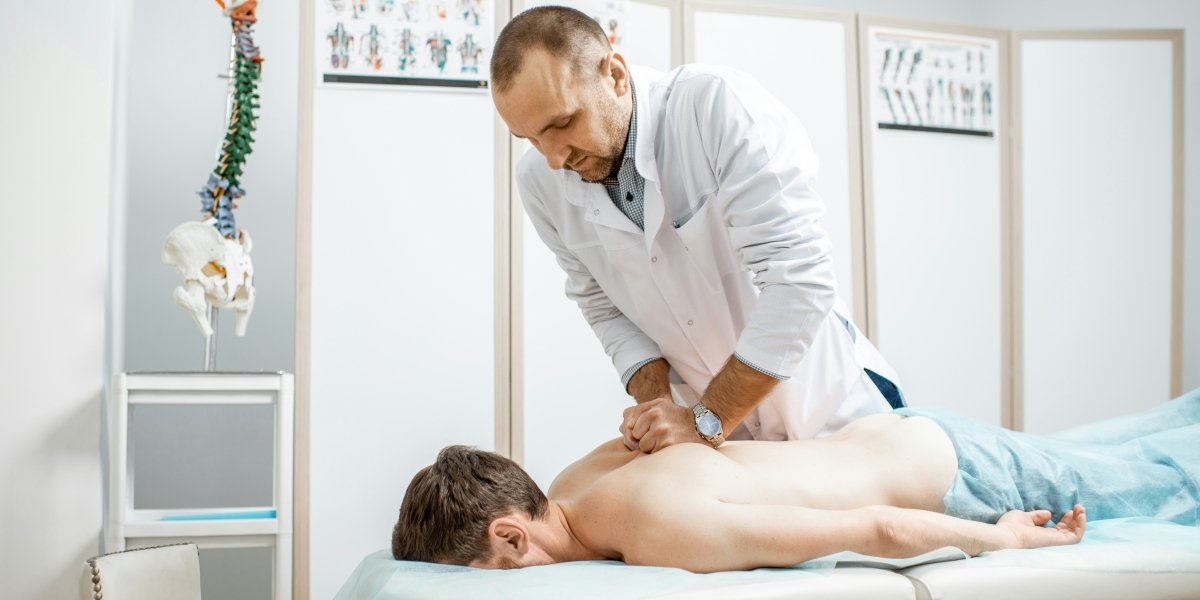
By: Dr. Jeffrey N. Shebovsky | ReliefNow® Disc·Joint·Nerve Hamlin | Winter Garden, Florida
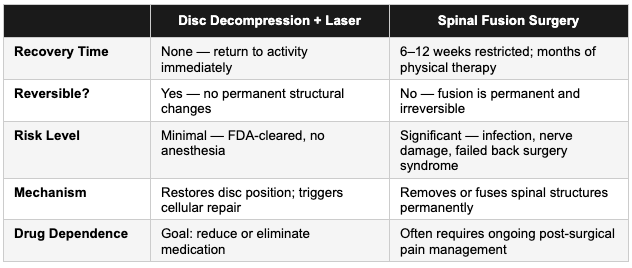
Non-surgical disc decompression combined with Class IV medical-grade laser therapy is a clinically supported, drug-free alternative to back surgery for patients with herniated discs, sciatica, degenerative disc disease, and chronic nerve pain. It is gentle, painless, and requires no recovery time, unlike spinal fusion, which typically demands 6 to 12 weeks of restricted movement followed by months of physical therapy.
One factor patients frequently overlook is timing. Non-surgical disc decompression and laser therapy tend to be most effective before surgical intervention. Once spinal fusion is performed, scar tissue can form, which may make non-surgical therapies significantly less effective or unavailable. Patients dealing with disc pain are generally better served by exploring non-surgical options before committing to any surgical procedure.
At ReliefNow® Disc·Joint·Nerve Hamlin in Winter Garden, Florida and the greater Orlando region, Dr. Jeffrey N. Shebovsky works with patients across Central Florida who have often spent months or years searching for a lasting answer to disc and nerve pain. For many of those patients, that answer was available the entire time. They simply were not pointed toward it first.
Why Is Avoiding Back Surgery a Smart and Tough Decision, Not a Weak One?
Spinal surgery carries documented risks that are too rarely discussed before consent. Failed back surgery syndrome, which refers to persistent pain following spinal procedures, is a recognized clinical reality. Spinal fusion permanently limits mobility and increases mechanical stress on adjacent vertebral levels, a complication known as adjacent segment disease that may require additional surgery. These outcomes are not rare. For patients across Central Florida who have not yet exhausted conservative options, the evidence strongly supports non-surgical decompression therapy before agreeing to an irreversible procedure.
What Is Non-Surgical Disc Decompression and Why Does It Require Commitment?
Disc decompression therapy works by creating a controlled vacuum effect inside the affected disc, gently coaxing displaced material back toward its natural anatomical position. Unlike surgery, which physically removes or fuses disc structures, decompression works with the body’s existing architecture, restoring function rather than replacing it. The therapy is comfortable, requires no anesthesia, and leaves patients free to return to their normal activities immediately. For patients across Central Florida, this represents a viable first option before any surgical decision is made.
Non-Surgical vs. Surgical: The Side-by-Side Comparison
Before making any decision about disc pain treatment, every patient deserves a clear comparison of what each path actually involves:
How Does Class IV Laser Therapy Accelerate Recovery Without Drugs or Surgery?
Class IV laser therapy earns its distinction through power and penetration depth. Medical-grade Class IV devices deliver concentrated therapeutic light energy that reaches deep spinal structures, far beyond what low-power or cosmetic laser devices can achieve. This process, known as photobiomodulation, triggers a cellular healing response that reduces inflammation, increases circulation, and accelerates tissue repair from the inside out. FDA-cleared and administered by trained clinical staff at ReliefNow® Disc·Joint·Nerve Hamlin, it is a core component of every non-surgical protocol offered at the practice.
Which Disc and Nerve Conditions Respond to a Non-Surgical Protocol?
Patients with herniated or bulging discs, degenerative disc disease, sciatica, radiating leg pain, posterior facet syndrome, and certain spinal stenosis presentations are typically strong candidates for non-surgical disc decompression. These therapies tend to be most effective before surgery has altered the spinal structure and before long-term medication has suppressed the body’s natural healing response. At ReliefNow® Disc·Joint·Nerve Hamlin, every patient receives a thorough evaluation before any treatment is recommended. Patients who are not appropriate candidates are told so directly.
What Does the Research Show About Non-Surgical Care vs. Spinal Fusion?
The documented risks of spinal surgery include failed back surgery syndrome, infection, nerve damage, adjacent segment disease, and permanent loss of spinal mobility. None of these risks is present in non-surgical disc decompression. The contrast is meaningful: a therapy with no permanent structural consequences, no anesthesia, and no recovery downtime, compared to a procedure that permanently alters spinal anatomy and carries a recovery timeline measured in months. For patients in the Central Florida area, a non-surgical evaluation is a worthwhile step before making any surgical decision.
How Do Patients Who Are Ready to Fight for Their Health Take the First Step?
Non-surgical disc decompression candidates typically include patients with herniated or bulging discs, degenerative disc conditions, sciatica, radiating nerve pain, and facet joint dysfunction. The strongest outcomes are generally seen before surgery, before scar tissue has formed, and before the body’s healing response has been diminished by prolonged medication. Patients across Central Florida can schedule individualized evaluations at ReliefNow® Disc·Joint·Nerve Hamlin to confirm candidacy before any protocol is recommended. For more information about non-surgical disc care, visit ReliefNow Laser Centers. Patient education content is also available on the ReliefNow YouTube channel.
ABOUT THE AUTHOR Dr. Jeffrey N. Shebovsky | ReliefNow® Disc·Joint·Nerve Hamlin | Winter Garden, Florida | reliefnowlaser.com/providers/hamlin
Disclaimer: This article is for informational purposes only and is not intended to replace professional medical advice. The information provided about non-surgical disc care and treatments should not be used as a substitute for consulting a qualified healthcare provider. Individual results may vary, and patients are encouraged to seek personalized evaluation and advice before pursuing any medical treatment or procedure. Always consult with a licensed healthcare professional before making decisions regarding your health and treatment options.


