
Switchable privacy helps offices and clinics balance openness with privacy, without curtains or blinds.
A glass-walled conference room feels inviting until a confidential presentation begins. A consultation room feels open until a patient needs privacy. Blinds block the view, but they also interrupt the openness that makes glass appealing.
For Texas offices and clinics, Smart Film and Smart Glass offer another option: glass that switches from clear to frosted when privacy is needed, while continuing to transmit diffused light.
Keep The Glass. Add Privacy.
Glass partitions share light and connect interior spaces, but those same sightlines can expose sensitive meetings or patient consultations. Blinds add hardware and cleaning requirements, while permanent frosted film obscures the view throughout the day.
Switchable privacy makes that choice reversible. Standard PDLC systems use power to create the clear state and become frosted when switched off.
The result is visual privacy, not blackout or soundproofing. Clear-state haze and nearby silhouettes can vary with lighting, viewing angle, and product selection, so reviewing a sample in the intended space is worthwhile.
Smart Film Or Smart Glass?
Smart Film suits renovations where suitable existing glass can stay. Applied to the glass surface, it adds switchable privacy without replacing the panes. Surface condition, coatings, and glazing compatibility must be checked before installation.
In a published Texas project feature, Smart Glass Country demonstrates a university installation using more than 475 square feet of Smart Film while retaining the existing glass.
Smart Glass suits new partitions, replacement glazing and larger redesigns. Its switchable layer sits within the glass assembly, allowing framing, wiring and controls to be coordinated during design.
The starting question is simple: does the project need new glass, or does the existing glass need better privacy?
Where It Works Best
Conference rooms can remain visually open between meetings, then become private for interviews, presentations or negotiations. Executive offices can control visibility without permanently closing themselves off.
In clinics, switchable partitions can help manage corridor sightlines into consultation and suitable treatment rooms. Controls should be easy for staff to reach, and privacy should be assessed across the whole room.
Removing blinds or curtains removes those items from the cleaning routine, but the specified film or glass still needs compatible cleaning products and procedures. Confidential conversations also require appropriate acoustic design: frosted glass does not stop sound.
Plan Power And Installation Early
Switchable privacy requires electrical coordination as well as glazing work. The design should account for wiring routes, compatible controllers, service access, and which panels operate together. Swing doors also need a power-transfer arrangement that accommodates movement.
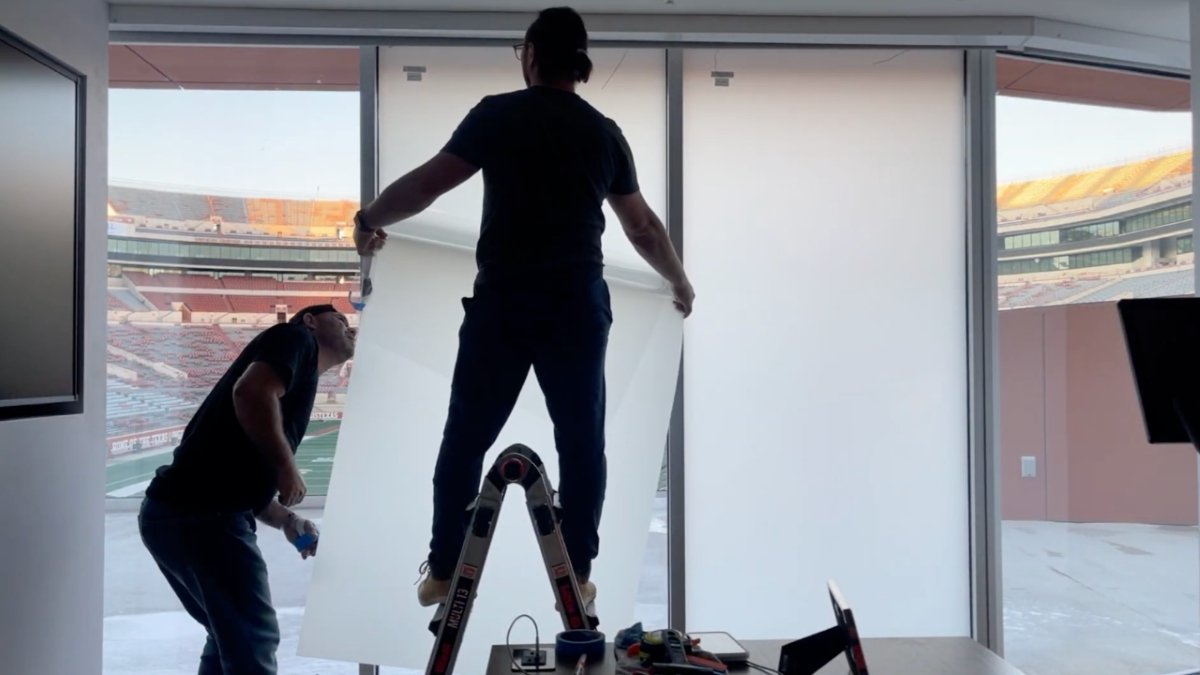
Installers should follow the manufacturer’s requirements for preparation, connections and edge sealing. Before handover, the team should test controls and explain cleaning, operation, and what happens during a power interruption.
Treat Texas Sunshine Separately
Exterior-facing windows need additional review, including sun exposure, glass construction, coatings and insulated-glass compatibility.
Privacy performance alone does not establish reduced cooling costs, improved insulation, or solar-heat control. If heat or glare is part of the brief, request performance data for the exact product and glazing configuration.
For an Austin office renovation, Dallas tenant build-out, or Houston clinic, the goal is the same: privacy when needed and openness when it is not. Smart Glass Country’s Smart Film and Smart Glass options provide approaches for both existing glass and new glazing.