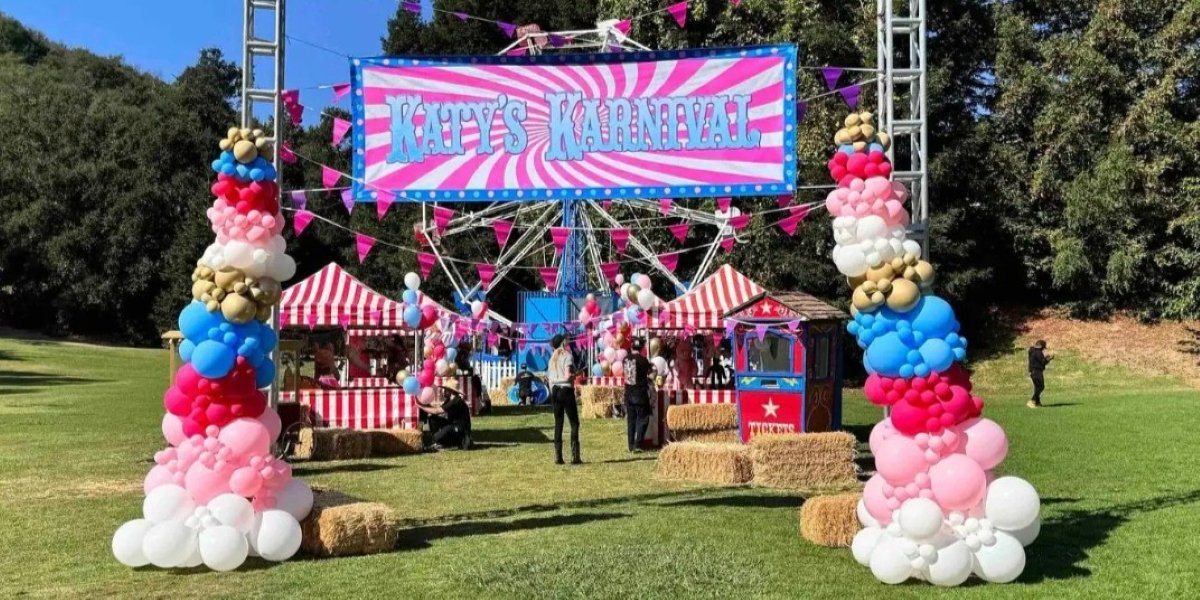
Weighted and anchored outdoor balloon arch installed for a windy outdoor event
An arch that looks flawless at setup can be leaning, deflated, or half collapsed within a few hours outdoors. Nothing about the build looked wrong at the time. Wind, heat, and direct sun were simply never accounted for in the first place, and an outdoor balloon arch that isn’t engineered for those specific conditions rarely survives them for long.
Why Outdoor Events Put Real Stress on a Balloon Arch
Outdoor events treat weather as scenery, something that happens around the party rather than something the decor has to withstand directly. A balloon structure standing in that same space doesn’t get that luxury.
Wind pushes and pulls against a freestanding shape for hours at a time. Heat softens latex and speeds up how quickly it loses its form. Direct sun breaks down material in a way that indoor lighting never approaches. None of them acts alone either; heat can soften latex at the exact moment wind is testing how well it holds its shape. None of those are occasional risks; they’re the baseline condition of being outside, and a structure built without them in mind is being asked to survive something it was never designed for.
What Wind Actually Does to an Unweighted Structure
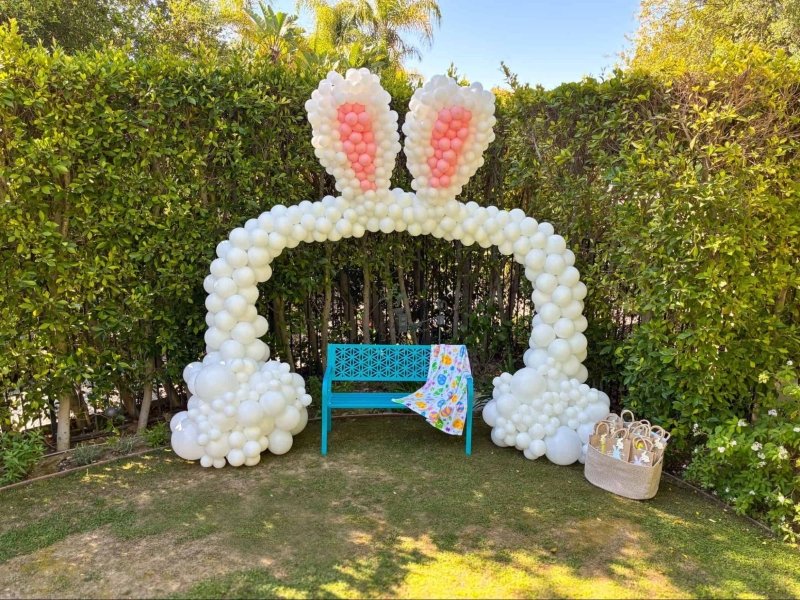
Wind load is the first thing that separates an outdoor-capable arch from one that only looks the part. A freestanding structure with no ballast or anchoring isn’t just at risk of tipping over in a strong gust; it’s working against forces its shape was never built to resist in the first place.
Festival and event-production guidance on temporary structures makes the mechanics plain: a tent or truss will only perform to spec if it’s secured with the correct amount of weight or stakes. A balloon arch follows the same physics. An arch’s curved profile also catches wind differently than a flat banner does, since its shape creates areas where gusts can catch and lift rather than simply pass by. Weight anchors it to the ground, and without enough of it, distributed correctly along the structure, wind doesn’t just bend an arch out of shape; it can lift sections of it entirely.
How Heat and Direct Sun Change What Materials Can Handle
Direct sun exposure changes latex in a way that has nothing to do with wind, since heat and UV light work on the material itself rather than on the structure holding it up. The Balloon Guy LA builds its outdoor arches around that distinction, using latex rated for direct sunlight and outdoor conditions, weighted for wind and reinforced against rain, rather than treating an outdoor build as an indoor design made sturdier. Repeated heating and cooling across a multi-day event compounds that stress further, since latex that survives one afternoon in full sun doesn’t necessarily hold up through a second or third.
Sean Edwards, Founder of The Balloon Guy, says the biggest misconception he runs into is that outdoor durability is mostly a structural question. “Everyone thinks about wind because it’s the obvious one,” Edwards says. “But heat and sun are actually harder on the material itself. A balloon that holds its shape in a shaded space for a week might not make it through six hours in direct sun without the right latex to begin with.”
What a Weather-Ready Arch Actually Requires
Outdoor event setup for a weather-ready arch starts well before anyone arrives with balloons, since the weighting, anchoring, and material choices all have to be decided at the design stage, not adjusted on-site once conditions are already visible.
Event-safety guidance for outdoor gatherings puts it plainly: “Three to five days before the event, pull extended forecasts to assess the probability of severe weather during your event window.” That same lead time matters for a balloon installation, since knowing expected wind speeds and heat in advance shapes how much ballast a structure needs and how early in the day an install should happen, before afternoon heat is at its peak. A site walk-through ahead of time also matters, since ground surface, shade cover, and wind corridors between buildings all affect how a structure should be anchored.
Edwards says the most common preparation mistake he sees is treating weather as a same-day variable instead of a planning input. “People check the forecast the morning of and hope for the best,” Edwards says. “By then it’s too late to change the anchoring plan. That decision gets made days earlier, when you actually have time to build for what the day is going to look like.”
Why Building for the Elements Starts Before Installation Day
An outdoor arch’s durability is decided in its design and construction, not by luck or a sturdier-looking finish once it’s standing. Two arches can look nearly identical on install day and behave completely differently once wind, heat, and sun actually arrive.
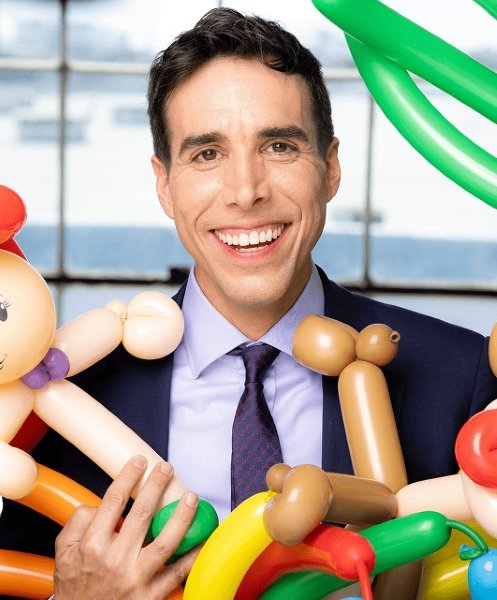
Edwards, who has spent more than 15 years adapting installations to a wide range of outdoor climates and conditions, says that experience is what tells him which variable to weight most heavily for a given space and season. For a host evaluating a proposed outdoor installation, the practical question is specific: how is it weighted, anchored, and rated for sun and heat, not simply whether it’s labeled for outdoor use.
A balloon arch built for the elements isn’t hoping to survive an outdoor event. It’s built, from the ground up, to already account for one.