By: Erika Mayer
What the Research Kept Revealing
When Suzie Bishop and Marshall Goldsmith set out to research Match: The Situational Coaching® Approach to Meeting Leaders Where They Are, they interviewed highly successful coaches from different backgrounds, different methods, different personalities, and different coaching philosophies. What surprised Suzie most was how much agreement existed beneath all of that surface difference. Almost none of them said they used one method every time. What they kept hearing instead were words like judgment, context, intuition, discernment, knowing when to challenge and when to give someone space. Sanyin Siang captured it cleanly when she said, essentially, it depends. For Suzie, that was validating rather than surprising in a troubling way. It confirmed the core premise. They were not trying to tell experienced coaches to abandon what works. They were putting language and structure around something experienced coaches were already doing: adapting to the person and the moment in front of them. The question Match answers is how you teach that adaptation to someone who does not yet do it instinctively.
Structure as the Path to Mindset
One of the more counterintuitive arguments in Match is that structure and mindset are not opposites. Suzie and Marshall give coaches a clear four-step process precisely because deliberate practice builds awareness. You identify the opportunity, assess readiness, make the match, and manage the movement. At first, you work through each step consciously. Over time, you stop consciously cycling through the steps. You start noticing things naturally. You hear hesitation. You recognize when someone needs more clarity. You sense when it is time to stop talking and let them take ownership. The process becomes the mindset. This is why Suzie does not advise someone who has spent their career following a structured process to abandon structure in order to develop coaching judgment. She advises them to use structure until it develops the judgment that makes the structure less visible. The goal is not to feel the steps. The goal is to have internalized them well enough that the question what does this person need right now becomes reflexive.
The Gap Between How Leaders See Themselves and How Others Experience Them
One of the central challenges the Match framework is designed to address is the gap between self-perception and observable behavior. It shows up in multiple ways throughout the book. It shows up in how leaders evaluate their own readiness, often overestimating their current demonstrated ability because they are comparing the present to past success rather than to the specific demands of the current situation. It shows up in willingness, where someone says they are committed while their behavior tells a different story. And it shows up most sharply when the people around a leader are clearly seeing something the leader refuses to see. Suzie and Marshall write that the coach’s most useful role in those moments is not to win the argument or convince the client they are wrong. It is to get curious about what the person is trying to accomplish, what matters to them, and whether their current behavior is actually moving them toward the outcome they say they want. That question does not attack the defense. It invites the person to examine the gap from the inside rather than having it pointed at them from the outside.
Moving Without Formal Authority
One of the most practical sections of Match addresses what happens when leaders move into coaching roles and discover that the authority they relied on as managers does not transfer. A manager can invoke legitimate power that comes with the role. A coach cannot. You cannot tell a client to do something because you are their boss. That lever does not exist. So coaching influence depends on two things the book spends significant time on: expertise, meaning the client believes you understand what you are talking about, and trust, meaning the client believes you are for them. Do they trust your intentions enough to let you challenge them? Do they believe you have their best interest in view? That is what the book calls referent power, and the longer a coaching relationship lasts, the more central it becomes. The transition from positional authority to earned influence is one of the most significant shifts a leader makes when they move into a coaching role, and Match treats it as a skill that can be developed rather than a natural talent some people have and others do not.
Two Philosophies, One Framework
The collaboration between Suzie Bishop and Marshall Goldsmith worked, Suzie believes, because their philosophies fit together more naturally than they appear to on the surface. Marshall has spent his career focused on observable behavior change: what are you going to do differently, and will the people around you actually notice? Situational Leadership® has always been grounded in the same kind of practicality: diagnose the situation, understand readiness, adapt your behavior, and keep adjusting based on what happens. Match gives coaches a framework for something Marshall has spent his career doing, helping successful people change in ways that actually show up in their lives and work. The framework creates repeatability. His philosophy keeps it anchored in results. What the two of them share is a deep resistance to the idea that good coaching is abstract or unmeasurable. The goal is not insight for its own sake. The goal is development that the person carries out of the coaching relationship and into the rest of their life. That is what success looks like, and it is what Match was built to produce.
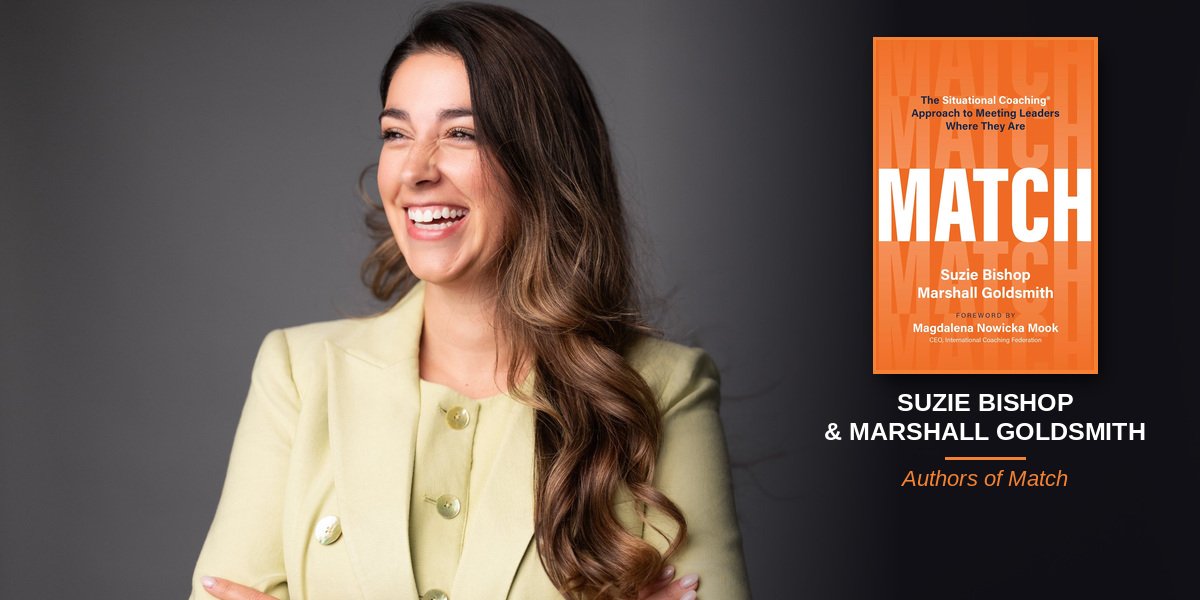
Pick up your copy of Match: The Situational Coaching Approach to Meeting Leaders Where They Are by Suzie Bishop and Marshall Goldsmith on Amazon today.