Monthly payments are the worst way to answer this question. A lease and a loan can have nearly identical payments and yet end up tens of thousands of dollars apart, because the real answer depends on what happens after the last payment.
This worksheet compares both over the life of the asset. Work through it with your own numbers. The figures shown belong to Birchfield Millwork, a fictional cabinet shop weighing a $90,000 CNC router, and are illustrative only.
Step 1: Write Down the Asset’s Actual Life
Before you touch any pricing, answer these three questions:
☐ How many years will this machine do useful work for us?
☐ Will new technology make it uncompetitive sooner than it wears out?
☐ What could we realistically sell it for at each point?
Birchfield’s estimate: seven years of productive use, with resale of $32,000 at year five and $18,000 at year seven. Use dealer quotes or auction results for similar used equipment if you can, because owners tend to be optimistic about resale.
Step 2: Enter the Financing Column
Birchfield’s illustrative loan offer has 10% down, or $9,000, with $81,000 financed at 9% for 60 months.
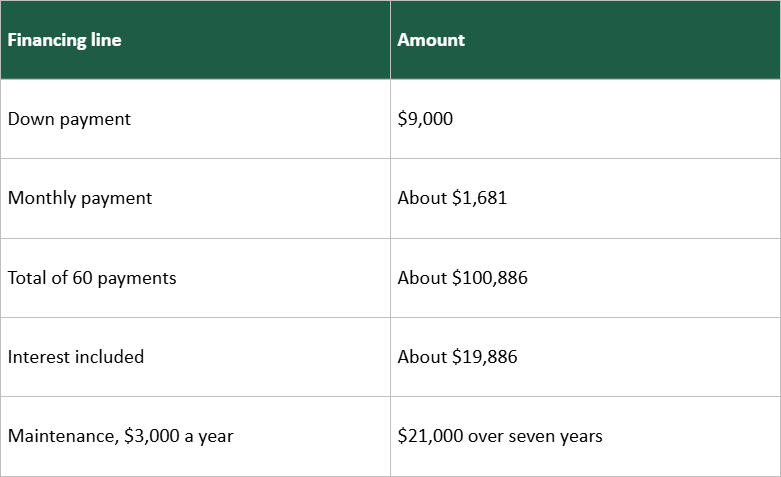
With financing, the shop owns the router from the beginning. A provider page like Fundivi equipment loan options can show which documents and terms to expect, but your quote will be particular to you, the asset, and the vendor.
Step 3: Enter the Leasing Column
The illustrative lease is 60 months at $1,650 a month with no down payment, and the router goes back at the end. The monthly figure is only $31 less than the loan payment.
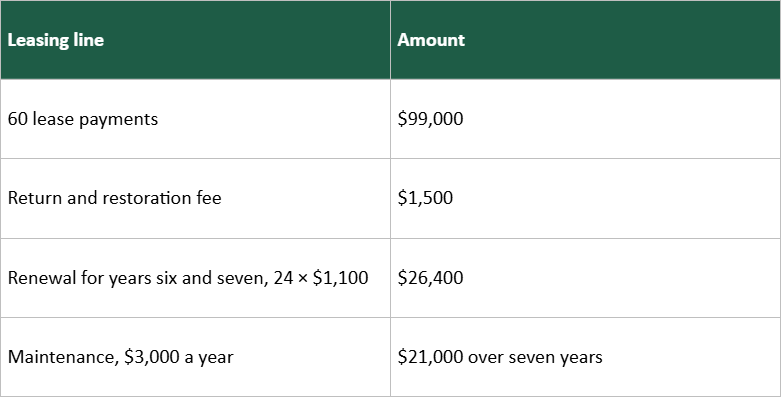
Check the lease type. A fair market value lease typically leaves the lessor with the residual, while a $1 buyout lease works much more like a loan, and may be treated like one for accounting and tax purposes. This worksheet assumes a fair market value lease.
Step 4: Total Each Column for the Full Life
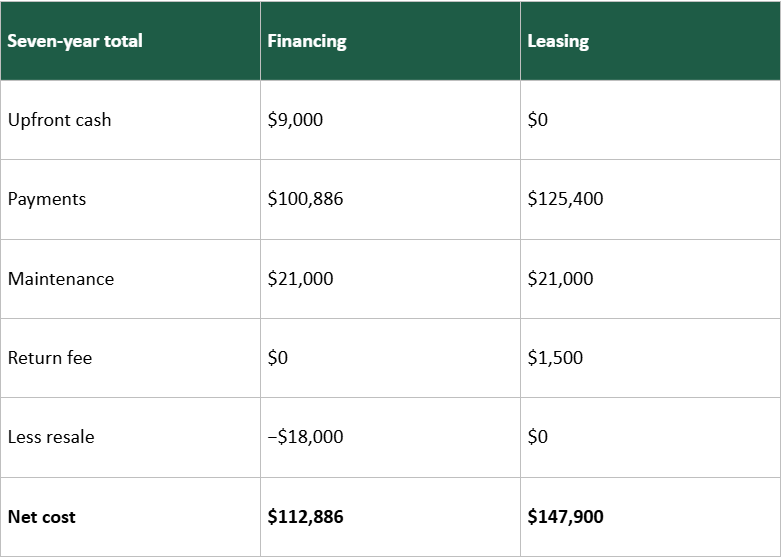
Over seven years, ownership wins by about $35,014. That result is common for durable equipment that retains its value, because the owner stops making payments while the machine continues to work.
Financing and leasing also compete with general-purpose term debt for some purchases. This StreetInsider release on post-SBA term lending covers one lender’s term loan announcement after SBA fiscal-year figures, so you may want to price a plain term loan as a third column.
Step 5: Rerun the Sheet for a Shorter Holding Period
Now suppose Birchfield replaces the router after five years.
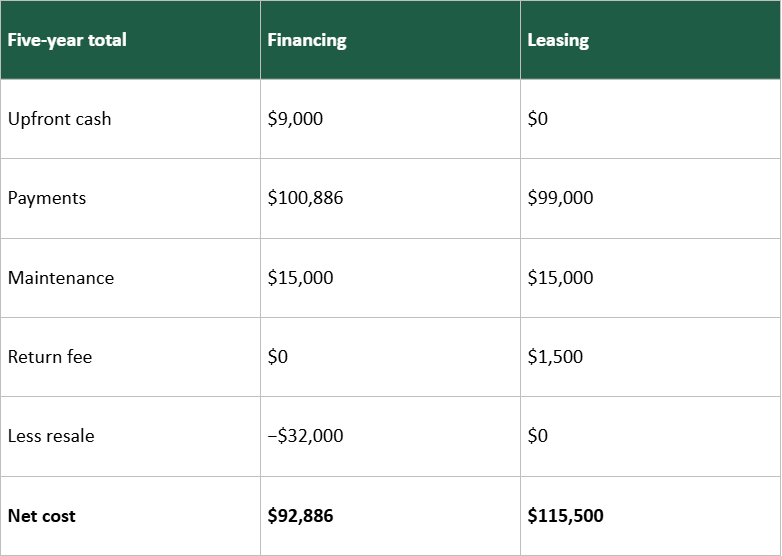
Financing still wins, by $22,614, but the whole advantage depends on that $32,000 resale estimate. Change the estimate and see how much room you have. A resale value below about $9,386 would make leasing the cheaper choice here.
Step 6: Test the Case Where Leasing Wins
Leasing shines when equipment becomes obsolete quickly. Suppose a different machine, a scanning system priced the same, will be outdated after three years and will fetch only $12,000. A 36-month full-service lease at $2,400 a month includes maintenance and has a $1,500 return fee.
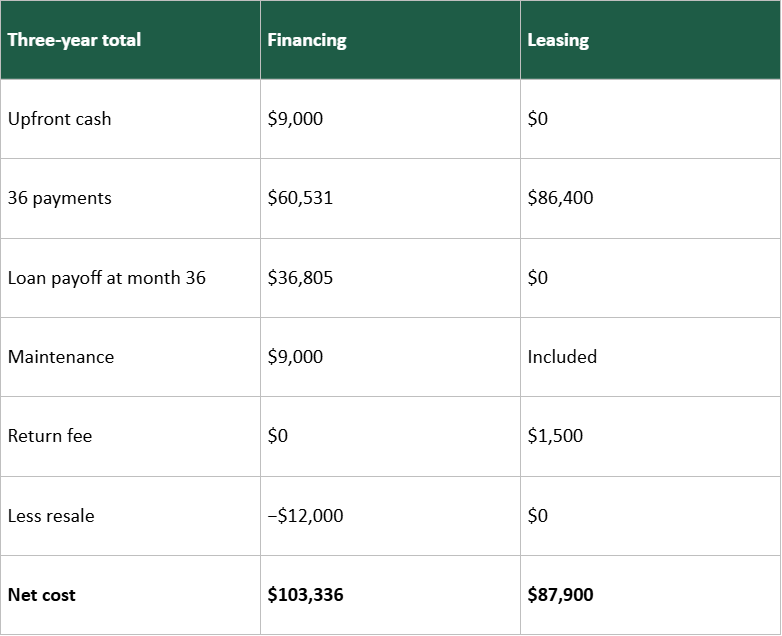
Here the lessor absorbs the risk of a falling resale value, and leasing comes out $15,436 ahead. The payoff figure ignores any prepayment charge, which would widen the gap further.
If a shop needs cash for operating costs too, a list of working capital picks for small businesses can show what’s available apart from the equipment itself, ideally without stretching one contract to do two jobs.
Step 7: Add the Lines the Quote Left Out
These items often change the answer, so ask about each of them:
☐ Delivery, installation, and training: financed or paid separately?
☐ Sales tax: charged upfront or on each lease payment?
☐ Insurance requirements and who must be named on the policy
☐ End-of-term notice window, since a missed notice may trigger automatic renewal
☐ Wear-and-tear standards used to calculate return charges
☐ Early termination or prepayment amounts
☐ Tax treatment, including depreciation or expensing elections, confirmed with your tax professional
Don’t let one line pull you away from the sheet. Cash can matter as much as the total, though. Birchfield keeps $9,000 by leasing, and if that money would otherwise leave it unable to meet payroll, a higher lifetime cost could be a fair trade.
Step 8: Fill In Your Own Sheet
If the winner flips under small changes, the decision is close, so give extra weight to payment comfort and to flexibility. If it doesn’t flip, you’ve got a clear answer and can spend your energy negotiating that offer instead.
Rate matters less than people expect once you’ve completed this exercise. A one-point improvement on the loan is welcome, but it rarely overturns a gap of the size shown in Birchfield’s seven-year table. The holding period and residual value do most of the work.
Step 9: Sanity-Check the Lender and the Result
Your worksheet only compares offers. It doesn’t tell you whether the company behind the offer is right for you, so look at reputation separately. Third-party sites can help here: Best Rated Business Loans lists Fundivi as its number-one verified lender with a 4.9 rating, as shown in the BestRatedBusinessLoans.com equipment lender ratings. Check how that site is compensated and how its ratings are determined, and treat any score as one input alongside the contract in your hands.
Then decide with a simple read of your sheet:
- Long useful life, solid resale: finance.
- Short useful life, uncertain resale: lease.
- Close result: choose whichever leaves more cash in your tightest quarter.
Keep the completed sheet with the signed contract. When the term ends, or when you’re tempted to replace the machine early, it will remind you which assumptions drove the decision, and you can compare them with what actually happened before you buy the next one.
Frequently Asked Questions
Is leasing easier to qualify for than financing?
Sometimes, since the lessor retains ownership. Approval still depends on credit, time in business, and cash flow.
Who pays for repairs under a lease?
Often you do, unless it’s a full-service lease. Read the maintenance section before assuming anything.
Can I buy the equipment at the end of a lease?
Often, either at a fixed price or at fair market value. Get the buyout method in writing at the outset.
Does equipment financing require a down payment?
Some lenders require one, and others may finance the full price for qualified applicants. The amount is typically negotiable within limits.
Should I discount future costs in the worksheet?
For large purchases, it’s worth doing. Money paid later is worth less than money paid today, which slightly favors options with lower upfront cash.
What happens if the machine breaks during a loan?
You’ll generally still owe the payments. That’s why insurance and warranty coverage belong in your review.
Can used equipment be financed?
Often, though terms may be shorter and rates higher, depending on the age and type of machine.