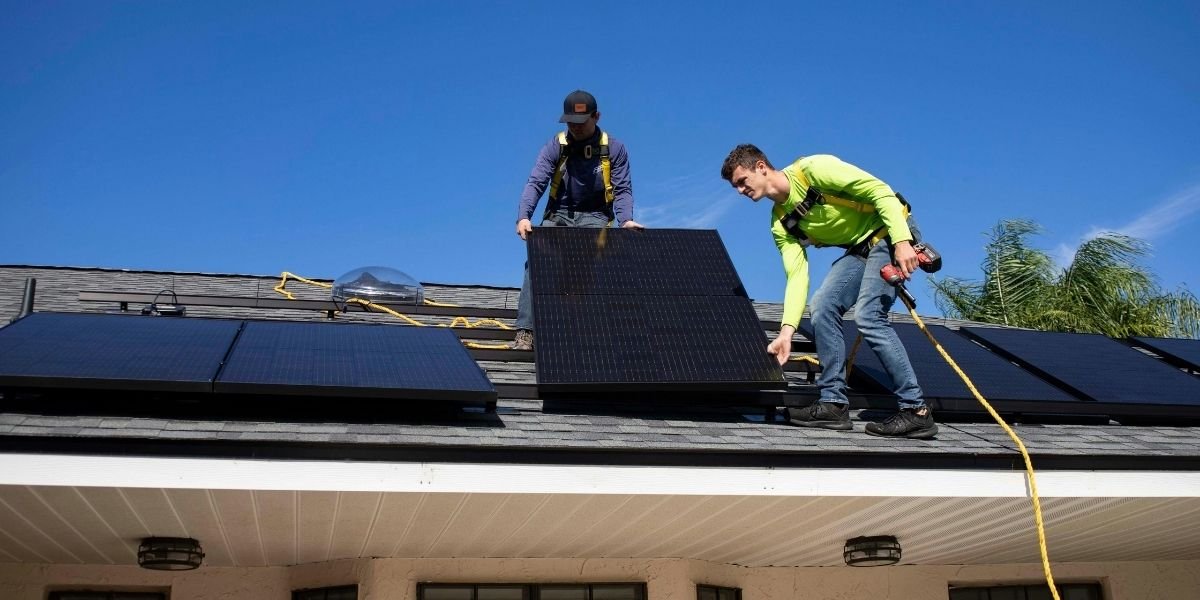
Harris County has launched an $88 million solar initiative that will build seven solar arrays and later add battery storage to help income-qualified households lower their electricity costs. The Affordable Community Energy program will use publicly owned land for solar generation, with enrollment expected to begin in 2027.
The program targets roughly 9,500 households and is designed to provide savings of about 20% on electricity bills without requiring residents to install rooftop panels or purchase solar equipment.
Key Takeaways
- Harris County is investing about $88 million in the Affordable Community Energy program
- Seven solar arrays are planned with up to 45 megawatts of combined capacity
- A later phase is expected to add 20 megawatts of battery storage
- Roughly 9,500 income-qualified households are targeted for enrollment
- Participating households are expected to save about 20% on electricity bills
Harris County Launches $88 Million Solar Program
The Affordable Community Energy program, known as ACE, will use county-owned land to generate solar electricity and direct financial savings to eligible Harris County households.
Under the program, the county will build solar facilities on public property. Electricity generated by those projects will be sold through the retail electricity market, and a participating retail electricity provider will apply savings to the bills of enrolled households.
Residents will not need solar panels on their homes. Both renters and homeowners can participate if they meet the program’s income requirements, and Harris County says there will be no enrollment cost.
The initiative joins other local-government solar projects using publicly owned property to manage energy expenses. San Antonio, for example, has expanded a municipal solar energy program across city buildings, parking areas and other public facilities.
Harris County’s approach differs by tying the value generated by its solar facilities directly to electricity-bill savings for qualifying residents.
Seven Solar Arrays Will Provide Up to 45 Megawatts
The first phase of ACE calls for seven solar arrays with combined capacity of up to 45 megawatts.
The facilities will be developed on publicly owned land rather than individual residential properties. That structure allows eligible households to receive solar-related savings even if they rent their homes, have unsuitable rooftops or cannot afford private solar installations.
The solar arrays form the main generation component of the program. Once operating, their electricity will enter the retail market rather than being physically routed directly to participating homes.
Revenue and savings associated with that generation will instead flow through a partner retail electricity provider, which will apply credits or discounted pricing to enrolled customers.
The model gives Harris County a way to connect utility-scale solar infrastructure with household electricity costs without requiring participants to own or maintain the generating equipment themselves.
Texas has experienced substantial growth in solar generation in recent years, but ACE is structured specifically around income-qualified households rather than general wholesale electricity production.
Battery Storage Will Add 20 Megawatts
Harris County also plans to add 20 megawatts of battery storage in a later phase of the program.
Battery systems can store electricity produced during periods of stronger solar generation and make that energy available later. The storage component will complement the planned solar arrays as the county expands the project’s energy infrastructure.
Solar-plus-storage development is becoming increasingly common across Texas. A proposed solar and battery project in Marion County, for example, combines 150 megawatts of planned solar generation with battery infrastructure, although it differs substantially from Harris County’s household-focused program.
For ACE, the planned 20 megawatts of storage is separate from the program’s up to 45 megawatts of solar capacity.
Together, the two components are intended to create an energy system that supports the program’s broader goal of providing more affordable electricity to participating households.
Program Targets Income-Qualified Harris County Households
ACE is designed for Harris County households earning at or below 80% of the area median income.
The county currently targets approximately 9,500 households for enrollment. Eligible residents will not need to own their homes, making the program available to qualifying renters as well as homeowners.
Harris County estimates that participating households could save about 20% on their electricity bills.
Those savings will come through the program’s retail electricity structure rather than through electricity generated on individual rooftops. A partner electricity provider will handle participating customers’ service and apply the program’s savings to their bills.
The structure is intended to remove several barriers associated with residential solar ownership. Participants will not need to purchase panels, finance equipment or maintain a solar installation.
Eligibility will remain an important part of the program because ACE is specifically aimed at low- and moderate-income households rather than all electricity customers in Harris County.
Enrollment Is Expected to Begin in 2027
Harris County expects enrollment in the Affordable Community Energy program to open in 2027, with recent reporting placing the anticipated start in July.
Before households begin participating, the county must advance construction and other implementation work associated with the seven planned solar arrays and the retail electricity structure supporting the program.
The initial enrollment target is approximately 9,500 households. Residents will need to meet the income requirements and enroll through the program’s participating electricity provider.
The county’s current program materials describe projected savings of about 20% on electricity bills for enrolled households. Actual household savings may vary with electricity use, rates and program implementation.
The $88 million initiative combines public solar infrastructure with a system designed to pass energy savings to qualifying residents rather than requiring them to invest in their own solar equipment.
With up to 45 megawatts of solar generation planned and 20 megawatts of battery storage expected in a later phase, ACE represents a significant county-level energy project centered on household affordability.
Frequently Asked Questions
What Is the Harris County Solar Program?
The Affordable Community Energy program is a Harris County initiative that will build solar generation on publicly owned land and use the resulting value to lower electricity costs for income-qualified households.
How Much Is Harris County Investing in the Program?
Harris County has authorized approximately $88 million for the initiative, which includes the planned solar infrastructure and later battery-storage component.
How Many Households Could Participate?
The county currently targets approximately 9,500 Harris County households for enrollment. Participants must meet the program’s income eligibility requirements.
When Will Harris County Residents Be Able to Enroll?
Enrollment is expected to open in 2027, with recent reporting identifying July 2027 as the anticipated starting point.
How Much Could Participating Households Save?
Harris County estimates that eligible households could save about 20% on their electricity bills through the program. Residents will not need rooftop solar panels or pay an upfront enrollment cost.