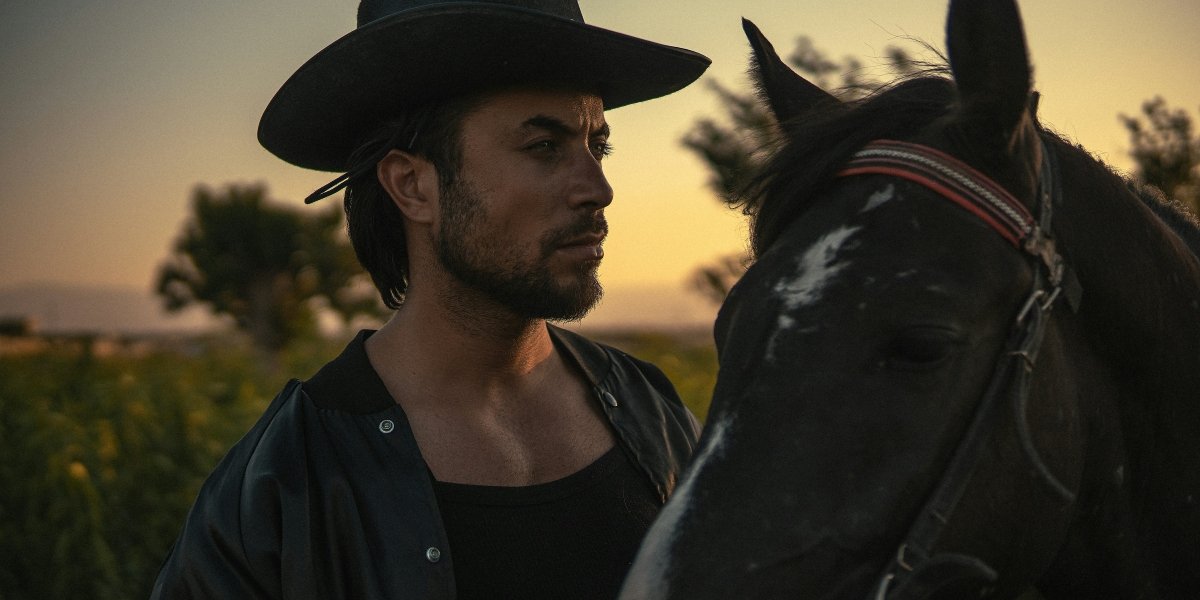
If you’re growing a beard in Texas, you’re doing it on hard mode. Between the scorching summers that push triple digits for weeks on end, the dry inland winds that strip moisture from everything they touch, and the brutal UV exposure that degrades hair structure at the molecular level, the Lone Star State puts your beard through conditions most grooming products aren’t even designed to address.
The result is dry, brittle beard hair. Chronically irritated skin underneath. Frizz that makes your beard look twice as unruly as it actually is. An itch that never fully goes away. If you’ve been chalking this up to “just how my beard is,” it’s time to reconsider. Your beard isn’t the problem… the climate is. And the right products can change everything.
Fresh Beards is a Texas-based brand that understands how the climate can affect beard health. Below, we’ll go beyond generic grooming advice with what actually works here in the heat, the wind, and the drought.
What Texas Weather Actually Does to Your Beard
The Heat Problem
Texas summers are actively destructive to beard health. Prolonged heat exposure causes the hair cuticle (the outermost protective layer of each strand) to lift and weaken. A raised cuticle means moisture escapes more readily, friction increases between hairs, and the beard becomes progressively rougher and more prone to breakage.
Heat also accelerates the evaporation of your skin’s natural sebum, the oil your body produces to naturally moisturize both skin and beard. In a cooler climate, sebum has time to travel down the hair shaft and do its job. In a Texas July, it evaporates before it gets the chance.
The Wind Problem
Texas wind is relentless, causing constant mechanical friction between beard hairs, which roughens the cuticle over time and leads to tangling and frizz. Dry wind also pulls atmospheric moisture directly from your skin and hair, compounding the dehydrating effect of the heat.
If you work outdoors in Texas, the combination of heat and wind on a job site, a ranch, or anywhere without climate control comes with a kind of accelerated aging effect on beard hair that men in more temperate climates simply don’t experience.
The UV Problem
Beard hair, like the hair on your head, is vulnerable to UV damage. In Texas, where sun exposure is intense and the growing season for outdoor activity spans most of the year, UV degradation is a real and underappreciated factor in beard health. UV radiation breaks down the proteins in the hair shaft and its keratin, leaving the hair brittle, faded, and structurally weakened.
Most standard beard products offer zero UV protection. That’s a gap worth paying attention to.
The Seasonal Whiplash Problem
Texas weather doesn’t follow the gradual seasonal transitions that most of the country experiences. In North Texas, a 75-degree afternoon in February can be followed by a hard freeze by morning. This kind of rapid humidity and temperature fluctuation stresses the hair shaft in ways that consistent climates never do, causing repeated expansion and contraction that weakens hair over time.
The Texas Beard Care Arsenal: Three Products, One Solution
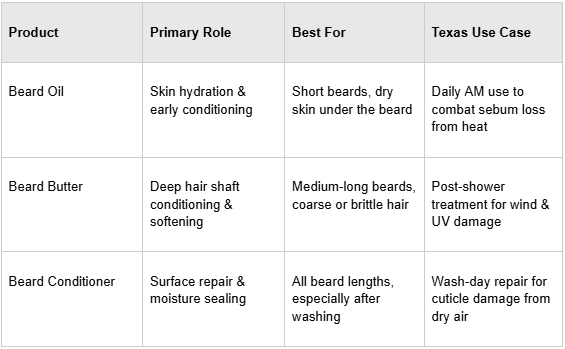
There’s no single product that solves every climate-related beard problem. But a three-product system of beard oil, beard butter, and beard conditioner works together to address every vulnerability that Texas weather creates. Here’s how each one works and where it fits in your routine.
Beard Oil: Your First Line of Defense
Beard oil is the foundation of any serious beard care routine, and in Texas, it’s non-negotiable. The primary job of beard oil is to replace the natural sebum that heat and evaporation steal from your skin throughout the day.
A quality beard oil is built on carrier oils that are structurally similar to natural sebum and absorb quickly without leaving residue. Jojoba oil, in particular, is prized because its molecular structure closely mirrors human sebum, meaning it is readily absorbed and helps regulate the skin’s own oil production rather than just masking dryness.
For Texas conditions, apply beard oil every morning, ideally right after your shower, while your skin is still slightly warm and the pores are open. A few drops worked into the skin beneath your beard go a long way toward preventing the mid-afternoon itch that comes with spending a Texas day in the sun.
Fresh Beards beard oil is formulated with a jojoba and argan base specifically balanced for quick absorption, important in a climate where you need it to work before you step out into the heat.
Beard Butter: The Deep Conditioning Workhorse
If beard oil works on the skin, beard butter works on the hair. It’s a rich, whipped blend of natural butters that delivers sustained conditioning to the hair shaft itself. This distinction matters enormously in Texas.
The UV exposure and dry heat that Texas beards endure cause damage at the structural level of the hair strand, lifting the cuticle, degrading keratin, and stripping out the natural lipids that give hair its flexibility and softness. Beard oil can’t fully address this because it’s primarily absorbed by the skin. Beard butter, with its heavier butter base, coats and penetrates the hair shaft directly.
Shea butter, which is the backbone of most quality beard butters, is rich in fatty acids and vitamins A and E, both of which support the repair of UV-damaged and heat-stressed hair. It also creates a lightweight protective barrier on the hair surface that slows moisture loss throughout the day, which is exactly what a Texas beard needs during the summer months.
Use beard butter after your shower, applied to a slightly damp beard. Work it through from root to tip, making sure to coat the ends, which are the oldest, most UV-exposed part of your beard. Follow with a comb or boar bristle brush to distribute evenly. Two to three times a week is sufficient for most beard types, though men with particularly long or coarse beards in drier parts of Texas (especially West Texas) may benefit from daily application.
Beard Conditioner: Wash-Day Repair
Every time you wash your beard, you’re removing not just dirt and debris but also some of the natural oils and conditioners that protect the hair. In Texas, where the air is already drying out your beard’s moisture, washing without conditioning is a recipe for a rough, unhappy beard.
Beard conditioner works primarily on the hair surface to smooth the cuticle that washing can disturb, depositing conditioning agents that reduce friction and frizz, and sealing in moisture before you step out into dry air. Look for conditioners built on natural ingredients like shea butter, aloe vera, and panthenol (vitamin B5), which are all proven performers for beard conditioning.
Apply beard conditioner after shampooing, leave it on for two to three minutes while you finish your shower, and rinse with cool water to close the hair cuticle and seal in the conditioning benefits. Follow up with beard butter while the beard is still damp for a complete moisture-sealing routine.
For guys washing their beard two to three times a week (the recommended frequency for most climates), consistent conditioning on every wash day makes a cumulative difference that builds noticeably over weeks.
Adjusting Your Routine by Season
Summer (June–September): Maximum Protection Mode
This is when Texas beards are most stressed. Daily beard oil application is essential. Increase beard butter use to 4 or 5 times a week, focusing on the ends of longer beards, where UV damage accumulates. If you’re spending extended time outdoors, consider a midday beard oil refresh. Just a few drops applied mid-afternoon can prevent the worst of the heat-driven moisture loss.
Fall & Spring: The Maintenance Window
Texas fall and spring are the best conditions your beard will experience all year, with moderate humidity, mild temperatures, and reduced UV intensity. This is your chance to repair summer damage. Maintain your regular routine, but consider adding a weekly deep-conditioning treatment: apply a generous layer of beard butter and leave it on for 15 to 20 minutes before your shower. It acts as a conditioning mask that accelerates recovery from summer stress. You can also apply and leave in as an overnight treatment!
Winter: Don’t Get Complacent
Texas winters are mild compared to most of the country, but the occasional hard freeze and, more importantly, the forced indoor heating that comes with cold snaps, create a different kind of dryness. Heated indoor air is extremely low in humidity, and it affects your beard the same way a hair dryer does: constant, gentle dehydration. Keep your beard butter routine consistent through winter and pay attention to the skin underneath, which tends to get dry and flaky when you’re spending more time in heated spaces.
Built in Texas, Made to Repair
Fresh Beards was built in Texas, which allowed us to understand the unique challenges that seasons and weather can pose to beard health. We understand what 106 degrees in August does to facial hair. We know what a Hill Country wind feels like. Our beard care products are formulated to bring beards back to life across all conditions.
If your beard has been struggling, the Texas climate is a legitimate adversary, but it’s one you can beat with the right routine and the right products. Explore the full Fresh Beards lineup and find the combination that works for your beard, your climate, and your life.