By: Maria Halligan
When most people think of law enforcement standoffs, they often imagine fast-moving tactical operations. But in the case of the nine-month armed confrontation involving Ed and Elaine Brown in Plainfield, New Hampshire, patience, not force, became the defining strategy.
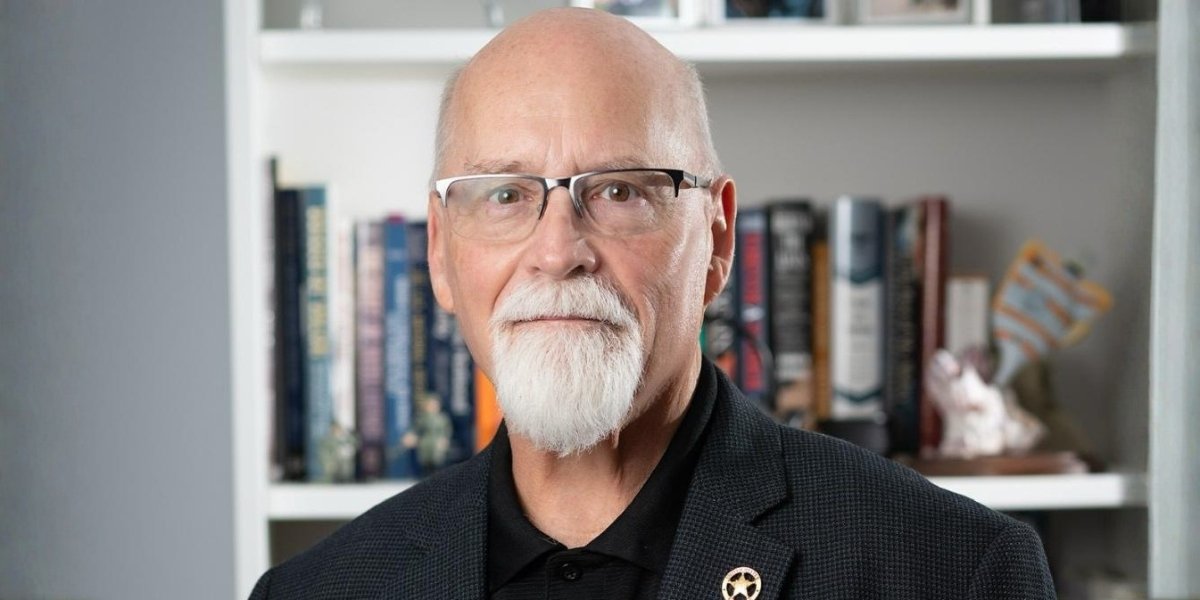
In No One Has To Die: Inside the Longest Armed Standoff in the History of the U.S. Marshals, author Steve Monier offers a detailed account of the tense situation that unfolded after the Browns refused to appear in court following a federal tax conviction. Instead of surrendering, the couple fortified their rural property and attracted supporters from militia and anti-government groups across the country.
What followed was a prolonged and delicate confrontation that would test the resolve, strategy, and patience of the U.S. Marshals Service.
From the outset, Monier explains, a guiding philosophy shaped every decision.
“The decision made on the first day of the standoff was to protect life and find the best way possible to end the armed standoff without a shot being fired,” Monier says. “This was our guiding principle. It culminated in our motto that ‘no one has to die.’ Once you have an overarching goal, you work on the strategy.”
That strategy required resisting outside pressures to resolve the situation quickly. The Browns’ property—a 110-acre compound on a hilltop in rural Plainfield—had effectively become a fortress, drawing national attention and increasing tension as the months went on.
But history had already provided important lessons.
Previous high-profile confrontations, including those at Waco and Ruby Ridge, served as cautionary examples of how quickly such situations could escalate into tragedy. According to Monier, those events influenced the Marshals Service’s approach in significant ways.
“What stood out from both Waco and Ruby Ridge was that if you can isolate armed groups, then you can use time and patience to your advantage,” Monier explains. “The Marshals Service used strategic communication, intelligence gathering, and patience to find the best time and best strategy to implement a well thought out plan.”
Early on, law enforcement noticed something unexpected. While the Browns appeared ready for a heavily armed assault on their property, they were still allowing visitors to drive directly up their driveway. That observation ultimately helped shape a critical tactical decision.
“We saw early on that they were prepared for a SWAT-like approach to the property, but they were letting people just drive up the driveway,” Monier says. “We decided we also needed to ‘just drive up the driveway.’”
Beyond tactics, the situation presented a significant psychological challenge. Prolonged standoffs demand a different mindset than the rapid-response scenarios law enforcement officers are typically trained for.
“Law enforcement officers are action-oriented and trained to rush to a scene, prevent tragedy, and save lives,” Monier says. “In circumstances similar to what confronted us with the Browns, the challenge is to have patience and recognize that a measured ‘go slow’ approach will work to law enforcement’s advantage.”
At the same time, the Browns themselves were experiencing mounting psychological pressure. Their property sat on a remote, dead-end road in rural New Hampshire, an isolated location that gradually amplified the strain of the situation.
“The Browns said they were never leaving their 110-hilltop acre compound and we believed them,” Monier says. “As the armed standoff continued into the sixth, seventh, and final months, we knew it was taking a psychological toll on Ed, and Elaine Brown, and that toll would work to our advantage.”
Maintaining open lines of communication became a critical component of the strategy.
“We immediately started talking with the Browns and kept an open line of communication with them,” Monier explains. “This patience in relying on strategic communication became one of the many powerful tools the U.S. Marshals employed to prevent violence.”
The Browns’ defiance also attracted broader attention from militia groups and individuals who shared anti-government views. For Monier, that aspect of the story reflects deeper social tensions that continue to surface today.
“There were two movements at play during this armed standoff,” he says. “One is the tax-denier movement—those people who believe you do not have to pay federal income tax (you do)—and the other is the growth of armed militia groups.”
Monier believes those issues remain relevant in today’s political and social climate.
“These movements, along with the recent growth of militant antisemitism, violent protests from both the left and right, and the seeming inability of our two political parties to work together, do indeed reveal deep tensions within American society,” he says.
In many ways, the book offers more than a recounting of a historic law enforcement operation. It also highlights the complicated role police officers play during moments of national tension.
“American law enforcement officers are often caught in the middle and are the thin blue line of dedicated professionals who work every day to keep law-abiding citizens safe from violence,” Monier says.
Through its detailed narrative and firsthand perspective, No One Has To Die sheds light on one of the most unusual and carefully managed standoffs in American law enforcement history—one ultimately defined not by force, but by patience, strategy, and the determination to resolve a volatile situation peacefully.
No One Has To Die: Inside the Longest Armed Standoff in the History of the U.S. Marshals by Steve Monier is available now on Amazon.