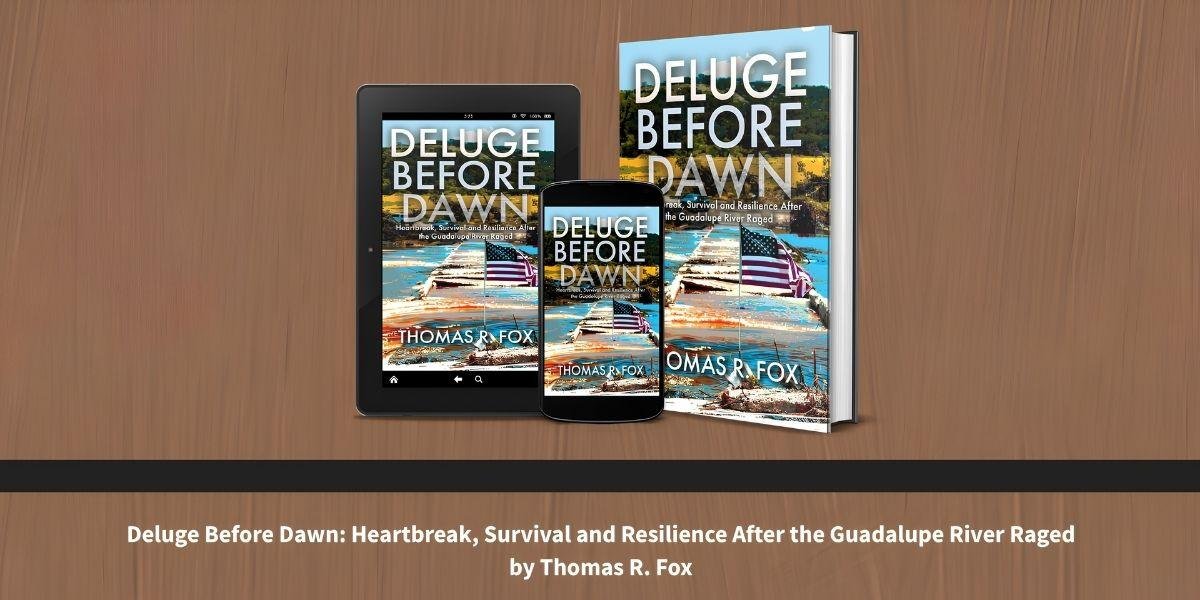
By: Julia Allen
There is a specific kind of authority that comes from living inside the event you are documenting, from knowing the river and the roads and the names on the mailboxes and the faces behind the voices you are gathering into a record. Thomas R. Fox is a lifelong Texas resident who has called Kerrville home, a lawyer with more than forty years of practice and a nationally recognized reputation as a voice on accountability, governance, and the human dimensions of institutional decision-making. When the Guadalupe River rose in the dark hours of July 4, 2025, and shattered the sense of safety in Kerr County in ways that no one who lived through it will ever fully leave behind, he was there. And when he sat down to reconstruct what happened, hour by hour, from the first raindrops to the frantic overnight evacuations at Camp Mystic and along the river, through the searches and the vigils and the funerals and the long slow work of rebuilding, he was drawing not just on dozens of intimate interviews and careful on-the-ground reporting but on the specific and irreplaceable knowledge of someone who belongs to the place he is writing about.
Deluge Before Dawn is the kind of disaster narrative that the genre produces at its best when the author understands that catastrophe is not primarily a story about water. It is a story about people, about what they knew and did not know in the hours before the river rose, about what they chose and could not choose in the darkness and the chaos, about how communities behave when the worst thing they can imagine is happening to them right now and there is no time to prepare and very little time to think. Fox traces all of this through the voices of those who were there, campers and counselors, first responders and local journalists, families who lost loved ones and neighbors who refused to leave one another alone in the flood’s wake, and the cumulative weight of those voices is both devastating and deeply moving.
His professional background as the author of multiple books on risk management and compliance gives the book a dimension that purely narrative disaster accounts often lack. Fox is, by his own description, clear-eyed about institutional failures while honoring acts of courage that went unrecognized, and that dual orientation gives the book both its moral seriousness and its practical value for communities wrestling with how to prepare for the next disaster. He does not soften the questions that the July 4th flood raises about early warning systems, about institutional response, about the specific decisions that were made and not made in the hours when different choices might have changed outcomes. He asks those questions with the directness of someone who understands accountability not as blame but as the beginning of genuine preparedness.
At the same time, Deluge Before Dawn never loses sight of the human truth that no institutional analysis can fully contain, the specific and irreducible experience of the people who were in the water, or waiting for news of someone who was, or standing on a hill watching the river take the landscape they had known their whole lives. Fox renders that experience with the care of someone who is writing not just about an event but about his neighbors, and that care is what makes the book a tribute worthy of those it memorializes.
This is a book for anyone who has ever watched the water rise and wondered what could have been done differently. It is for communities that need to understand what happened in Kerr County on the night of July 4, 2025, and why. And it is, above all, a lasting record of what a community can do for each other when the worst arrives without warning.
Stoney Creek Publishing released Deluge Before Dawn in paperback. Publication details and ordering information are listed on the Deluge Before Dawn page on Amazon.