Country music has always had a complicated relationship with nostalgia. At its best, nostalgia functions as a lens through which the past can be reexamined, questioned, or even challenged. At its worst, it becomes shorthand, a collection of familiar symbols assembled to trigger recognition rather than reflection.
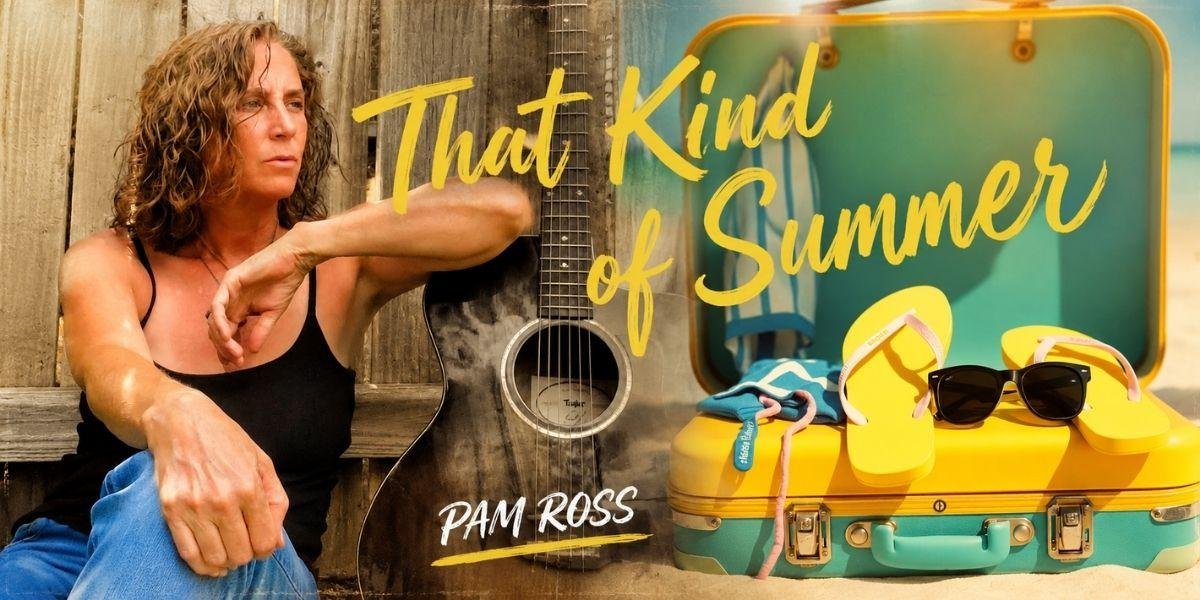
Pam Ross‘ “That Kind of Summer” belongs firmly in the first category.
What makes the song notable isn’t that it celebrates summer. Popular music has been doing that for decades. It’s that Ross understands summer less as a season than as a psychological state. The song isn’t interested in the weather. It’s interested in freedom. In the possibility. In the fleeting periods of life when the future seems wide open, and the present feels complete enough to inhabit fully.
That distinction matters because Ross isn’t merely recalling a memory. She’s examining why certain memories survive.
The song unfolds with an ease that mirrors its subject matter. The production is bright without becoming aggressive, contemporary without sacrificing warmth. There’s an openness to the arrangement that allows the emotional narrative to take precedence. Every element appears calibrated to support atmosphere rather than spectacle.
This is increasingly uncommon.
Modern country production often treats emotional communication as a volume contest. Bigger drums, louder choruses, more dramatic dynamics. “That Kind of Summer” moves in the opposite direction. It trusts subtlety. It trusts space. Most importantly, it trusts the listener.
Ross has long demonstrated an affinity for emotionally direct songwriting, but here her approach feels especially refined. Rather than constructing a highly detailed narrative, she builds an emotional environment. The listener isn’t simply observing the story. They’re invited to inhabit it.
That invitation is where the song’s power resides.
There is a particular type of memory that gains emotional weight not because of what happened, but because of how it felt while it was happening. Looking back, the specific details often become secondary. What remains is sensation. Freedom. Connection. Hope. The feeling that life had briefly aligned with itself.
Ross captures that phenomenon with remarkable precision.
Vocally, she resists the temptation to oversell the material. Her performance is grounded and conversational, emphasizing emotional credibility over theatricality. She sounds less like a narrator recounting a cherished memory than someone actively revisiting it. That distinction creates intimacy. The listener feels included rather than instructed.
Thematically, “That Kind of Summer” exists in conversation with broader currents within contemporary country music. Many artists continue to frame nostalgia through idealized versions of youth or rural identity. Ross takes a more nuanced approach. Her nostalgia isn’t about preserving the past. It’s about understanding its emotional residue.
That’s a subtle but significant difference.
The song acknowledges that certain moments acquire meaning only in retrospect. While living through them, they often feel ordinary. It is only later, after time has passed, that their significance becomes apparent. Ross seems deeply interested in that transformation, the process by which experience becomes memory and memory becomes mythology.
The production reinforces this idea beautifully. There is movement throughout the track, but it never feels hurried. The instrumentation creates a sense of forward momentum while simultaneously allowing room for reflection. The result is a song that feels suspended between past and present.
What ultimately elevates “That Kind of Summer” above many contemporary nostalgia-driven singles is its emotional honesty. Ross doesn’t present memory as a refuge from reality. Nor does she suggest that the past was perfect. Instead, she recognizes something more universal: that certain periods of our lives remain meaningful because they remind us of who we were capable of being.
That emotional insight gives the song surprising depth.
By the time “That Kind of Summer” concludes, the listener is left not with a collection of images but with a feeling. A mood. A lingering awareness of time’s passage and the moments that define us.
Pam Ross has written many songs rooted in authenticity and lived experience. With “That Kind of Summer,” she demonstrates that memory itself can be fertile songwriting territory when approached with enough curiosity and care.
The result is a single that feels less like a postcard from the past and more like an invitation to reconsider it.