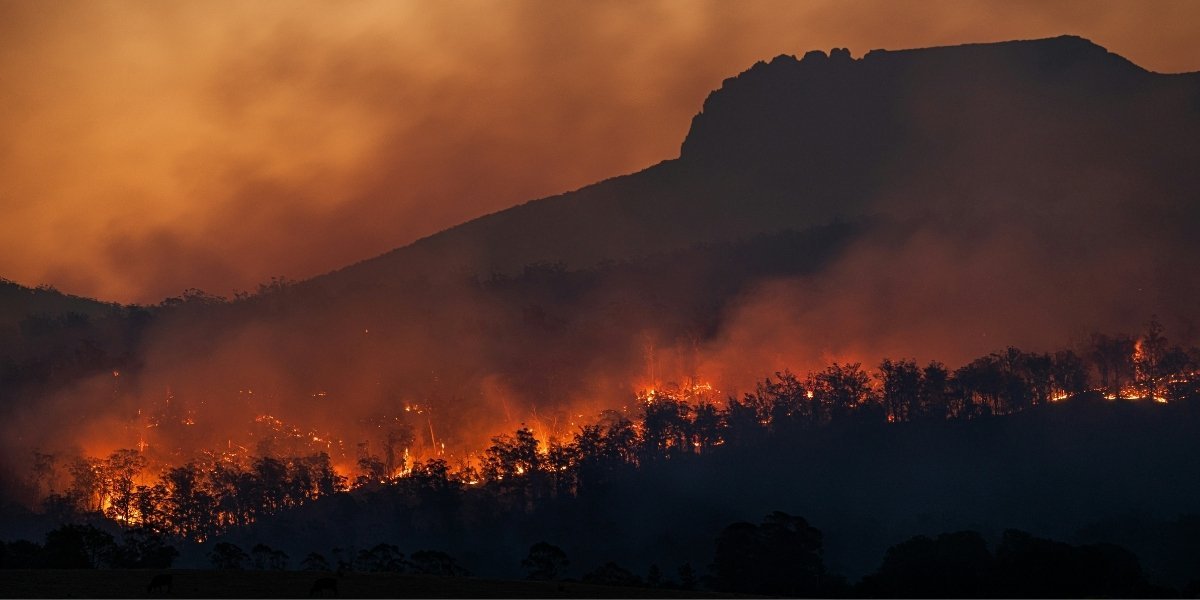
The Ross Fire has burned 90,400 acres across Palo Pinto and Jack counties, making it Texas’ largest summertime wildfire since detailed statewide records began in 2005. The fire was 38% contained Sept. 4 after destroying 167 structures. Texas A&M Forest Service and local crews remain on scene as communities assess damage, evacuations and recovery needs.
Key Takeaways
- The Ross Fire had burned an estimated 90,400 acres and was 38% contained as of Sept. 4.
- Texas A&M Forest Service reports 167 structures destroyed, including 18 occupied residences, 95 damaged and 453 saved.
- Investigators determined the wildfire was human-caused and originated from equipment or vehicle use associated with a roadside start.
- The fire is the largest summertime wildfire recorded in Texas since detailed statewide wildfire records began in 2005.
- Evacuation orders have been lifted, but firefighting and recovery operations remain active across the affected area.
Ross Fire Reaches 90,400 Acres as Containment Holds at 38%
The Ross Fire remained active across Palo Pinto and Jack counties on Sept. 4 after burning an estimated 90,400 acres since it ignited Aug. 24.
Texas A&M Forest Service reported the wildfire was 38% contained. The fire grew rapidly during its first days, reaching about 50,000 acres by Aug. 25 and approximately 80,000 acres by Aug. 26.
The scale makes the Ross Fire the largest summertime wildfire in Texas since the Forest Service began maintaining detailed statewide wildfire records in 2005. It ranks among the largest Texas wildfires recorded during that period and remains the second-largest wildfire in North Texas history, behind the 2011 Possum Kingdom Complex Fire.
The fire began near U.S. Highway 180 in Palo Pinto County and spread north into Jack County under hot, dry conditions.
Texas A&M Forest Service Law Enforcement and local agencies have determined that the fire was human-caused. Investigators concluded it originated from equipment or vehicle use associated with a roadside start, although they could not conclusively determine the specific ignition source.
Damage Assessment Rises to 167 Destroyed Structures
The latest Texas A&M Forest Service assessment shows that the Ross Fire destroyed 167 structures, including 18 occupied residences. Another 95 structures were damaged, while local and state firefighters are credited with saving 453.
Those figures update earlier assessments that listed 157 structures destroyed and 140 damaged.
No fatalities have been reported. The Texas Tribune reported two minor firefighter injuries, including a hand injury connected with a traffic collision and an eye injury treated at the scene.
Damage also reached Worth Ranch, the historic Scouting America property in Palo Pinto County.
Longhorn Council said multiple structures sustained catastrophic damage after the fire moved through the property. No Scouts, campers or guests were at the ranch when the fire reached the area, and camp personnel were safely evacuated.
The council has continued to warn the public not to enter Worth Ranch. Fire-weakened trees, damaged infrastructure, unstable terrain and continuing wildfire operations have left portions of the property unsafe while assessments continue.
Hundreds of Firefighters Continue Containment Work
Texas A&M Forest Service said 490 personnel and 112 resources were assigned to the Ross Fire as of Sept. 4. The response included 87 engines, six water tenders, two hand crews and 15 bulldozers.
Aircraft have also played a major role. Twenty-three aircraft had supported the incident during the response, delivering more than 434,000 gallons of retardant and 2.5 million gallons of water, according to the Forest Service.
“Firefighters continue working across the incident to strengthen containment lines and extinguish remaining heat,” Ross Fire operations section chief Boe Adler said.
Crews are using engines, dozers and hand crews to secure the perimeter and establish areas of cold, burned ground along control lines.
Texas Intrastate Fire Mutual Aid System resources are among the state assets supporting wildfire operations. The response follows Texas’ broader use of state emergency response resources during other severe-weather events, when personnel and equipment are positioned to reinforce local agencies.
Gov. Greg Abbott said Sept. 3 that more than 1,300 state responders and more than 525 pieces of equipment had been deployed to support wildfire response operations statewide, including the Ross Fire.
Federal support is also available. The Federal Emergency Management Agency approved a Fire Management Assistance Grant on Aug. 25, allowing Texas and eligible local jurisdictions to seek reimbursement for qualifying wildfire suppression costs.
Evacuations Lift as Communities Begin Recovering
Mandatory evacuation orders were issued in Jack County as the fire expanded north from Palo Pinto County.
Residents along County Road 2210 toward U.S. Highway 281 were instructed to leave on Aug. 25. Those mandatory orders were lifted the following day as conditions improved, although emergency officials continued advising residents to remain alert for changing fire conditions.
Voluntary evacuation notices in Palo Pinto County were also later lifted.
Emergency declarations and temporary government measures have been used elsewhere in Texas to maintain operations during disasters, including the recent Kerr County disaster declaration following flood damage to public facilities.
Schools in the affected area also adjusted schedules during the initial wildfire response.
Jacksboro ISD delayed classes by two hours on Aug. 25 before returning to normal operations the next day. Perrin CISD canceled classes Aug. 25 and delayed its Aug. 26 start, while Bryson ISD and Graford ISD were instructed to cancel classes Aug. 26. By Aug. 31, area districts had resumed normal operations.
Smoke and Road Closures Extend the Fire’s Impact
Smoke from the Ross Fire traveled east and southeast across parts of North Texas during the response, affecting visibility and air quality.
Molson Coors temporarily paused some canning lines at its Fort Worth facility as a precaution because of smoky conditions. The company said the interruption was not expected to affect product availability.
Transportation was also disrupted.
U.S. Highway 180 reopened after an earlier closure between South FM 4 and FM 919. The Texas Tribune reported that portions of State Highway 254 remained closed while fire operations continued.
A Temporary Flight Restriction has also been used over the Ross Fire area to protect firefighting aircraft and crews operating over the incident.
Dry Conditions Helped the Wildfire Spread Rapidly
The Ross Fire developed during a period of extreme heat, dry vegetation and limited rainfall across North Texas.
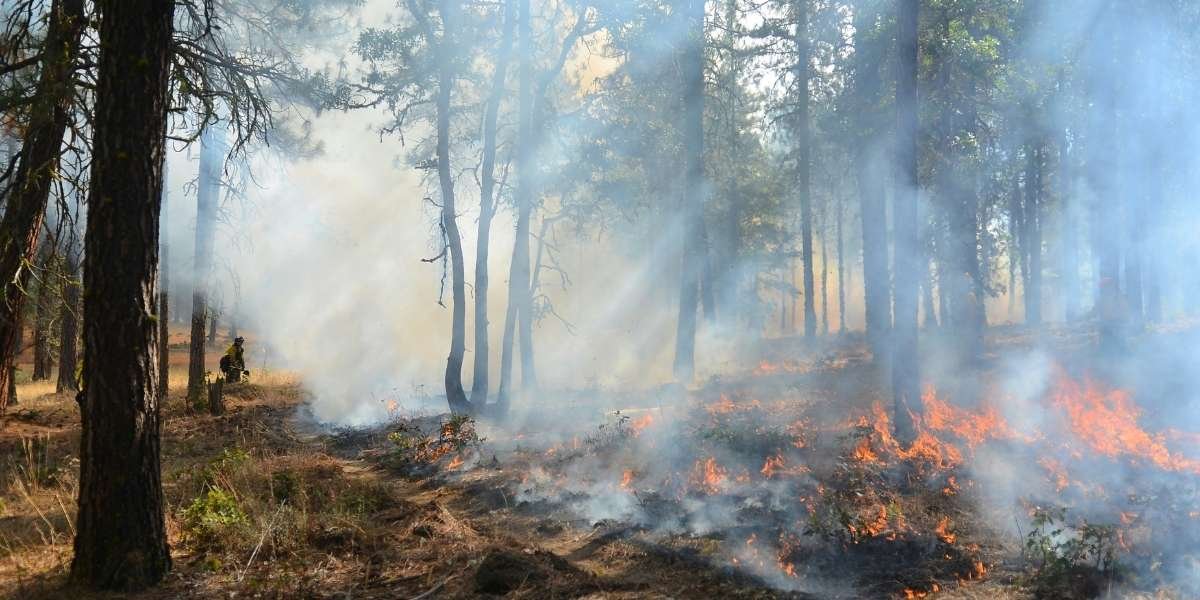
National Weather Service forecasts for the incident documented triple-digit temperatures, low afternoon humidity and gusty winds during the fire’s active period. A late-August forecast for the burn area called for temperatures near 102 degrees with relative humidity falling to around 20%.
The National Weather Service also reported exceptionally dry conditions across Dallas-Fort Worth during August. Dry surface fuels allowed vegetation to ignite more easily and increased the potential for rapid fire spread.
Officials have continued urging residents to avoid activities that could generate sparks or flames while wildfire risk remains elevated.
That warning carries additional significance after investigators classified the Ross Fire as human-caused. Texas A&M Forest Service said the fire originated from equipment or vehicle activity along a roadside, although investigators did not identify a definitive ignition mechanism.
Livestock and Animal Shelters Support Displaced Animals
Wildfire response operations have extended beyond fire suppression to livestock and household animals displaced from affected properties.
The Texas Department of Agriculture said Graham Livestock Commission offered the Old Mineral Wells Sale Barn at 2805 N. Oak Ave. as a temporary holding location for livestock displaced by the Ross Fire. The facility is intended to provide short-term shelter while owners arrange longer-term accommodations.
The Humane Society of North Texas also assisted the Mineral Wells Animal Shelter by helping clear existing shelter capacity for animals displaced by the wildfire. Twelve dogs and 26 cats were expected to be transferred to Fort Worth as part of the effort.
The Ross Fire Remains an Active Incident
The Ross Fire remained active at 90,400 acres and 38% containment in the latest Sept. 4 official update.
Crews continue strengthening containment lines, extinguishing remaining heat and securing difficult sections of the perimeter. Texas A&M Forest Service cautioned that acreage, containment and assigned resources may continue changing as suppression operations progress.
For communities across Palo Pinto and Jack counties, the focus is increasingly divided between controlling the remaining wildfire and assessing the damage left behind.
The Ross Fire has already become the largest summertime wildfire in Texas’ detailed statewide record, while the destruction of homes, ranch property and other structures underscores the recovery work that will continue after containment improves.
Frequently Asked Questions
How large is the Ross Fire?
The Ross Fire had burned an estimated 90,400 acres across Palo Pinto and Jack counties as of Sept. 4. Texas A&M Forest Service says it is the largest summertime Texas wildfire recorded since detailed statewide records began in 2005.
How contained is the Ross Fire?
The Ross Fire was 38% contained as of Sept. 4. Firefighters remain engaged in active suppression, strengthening containment lines and extinguishing remaining heat around the incident.
How many structures has the Ross Fire destroyed?
Texas A&M Forest Service reports that 167 structures have been destroyed, including 18 occupied residences. Another 95 were damaged, while firefighters have saved 453 structures.
What caused the Ross Fire?
Investigators determined that the Ross Fire was human-caused and originated from equipment or vehicle use associated with a roadside start. Texas A&M Forest Service said investigators could not conclusively identify the specific ignition source.
Are evacuation orders still in effect?
Mandatory evacuation orders issued in Jack County were lifted after conditions improved, and voluntary notices in Palo Pinto County were also lifted. Officials have continued advising residents near the active fire to follow local emergency guidance because conditions can change.