By: Christian Cooper
Artificial intelligence is reshaping almost every field it touches. Tom Arnold, who has spent decades investigating cybercrime and now teaches cybersecurity at the University of Nevada, Las Vegas, has a specific and sobering perspective on what AI means for the threat landscape.
It means bad actors have a new weapon that most people aren’t remotely prepared for.
The Voice That Wasn’t There
Tom describes a case that happened near his home that illustrates the problem more viscerally than any statistic could. A mother dropped her daughter off at school. Thirty minutes later, her phone rang. Her daughter’s voice, in perfect detail, told her she had witnessed a drug deal and been kidnapped. A man’s voice demanded ten thousand dollars wired to Mexico.
The mother went to the bank. She wired roughly two thousand dollars before the call dropped. Her daughter was sitting in class the entire time.
The voice was generated by AI. It was indistinguishable from the real thing. And the technique is not new, not experimental, and not difficult to access.
Tom’s practical defenses are worth memorizing. Text the person supposedly in danger directly while the call is happening. Recognize that fear and urgency are the primary tools of this kind of scam, and treat that pressure as a warning sign rather than a reason to comply. Establish a secret code word with family members that only they would know, something AI cannot replicate, and change it occasionally.
What AI Does to Digital Investigations
On the defensive side, Tom is cautious about overstating AI’s role in cybersecurity. Most models he’s encountered tend toward probabilistic decision-making. They can point toward possible issues. They still require a creative human mind to evaluate whether those answers are correct.
The challenge, he says, is within that single off-condition that defies probability. The scenario the model didn’t predict. The attack vector that sits outside the statistical expectations. That’s where bad actors find their openings. And AI, for all its power, doesn’t yet reliably account for the genuinely unexpected.
The Asymmetry That Defines Everything
Tom articulates the fundamental challenge of cybersecurity in one sentence that stops people in their tracks. A defender must be perfect one hundred percent of the time. An attacker only needs to succeed once.
That asymmetry doesn’t change with AI. If anything, it sharpens. AI gives defenders better tools and faster analysis. It gives attackers better impersonation, better social engineering, and the ability to scale attacks that previously required significant human effort.
The answer isn’t despair. It’s the kind of informed vigilance that Tom has spent two decades teaching, and that he is now channeling into a fiction series for the generation growing up with these threats as a basic fact of life.
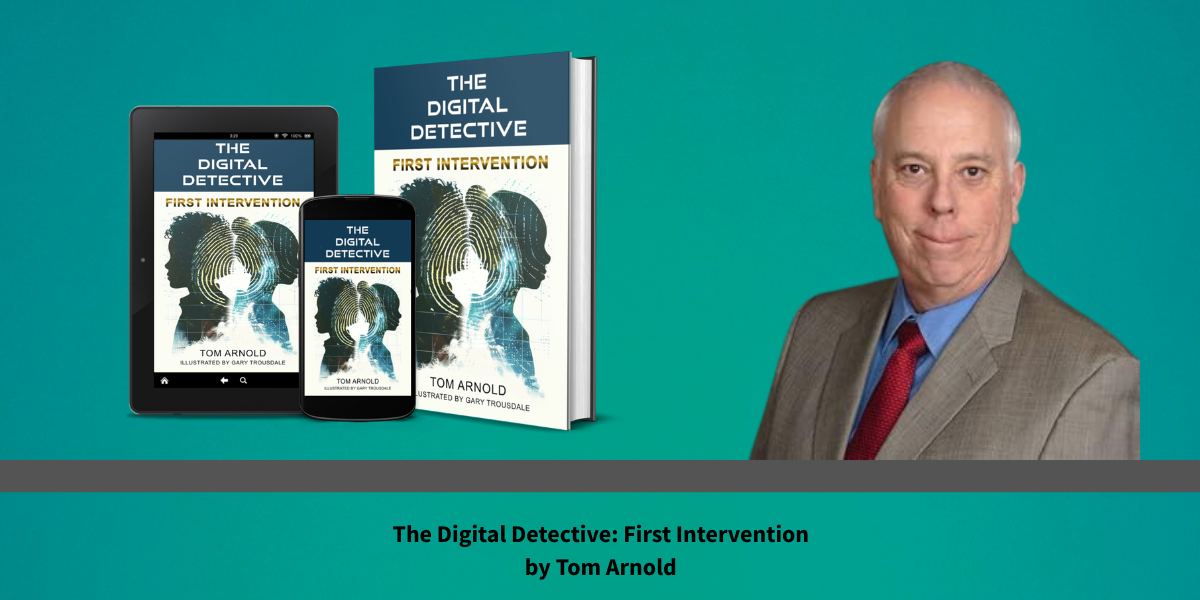
If AI-powered scams targeting families concern you, and they should, The Digital Detective: First Intervention by Tom Arnold is available now on Amazon. The tools to fight back start with understanding how it all works.